Dagelijks CodewoordVerified
About Game
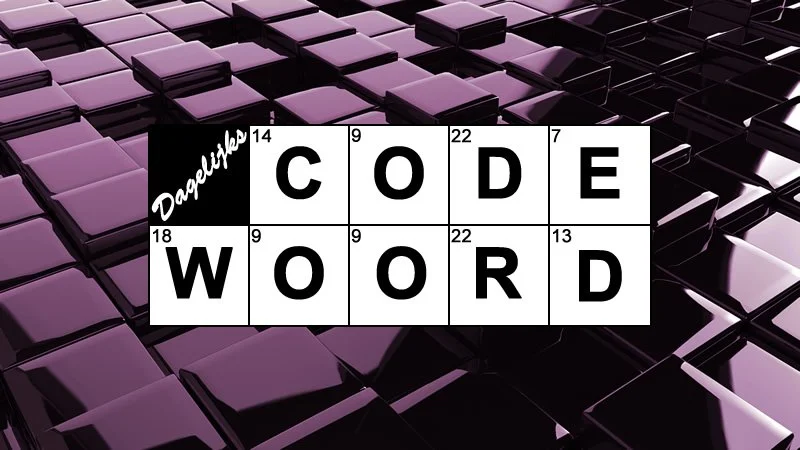
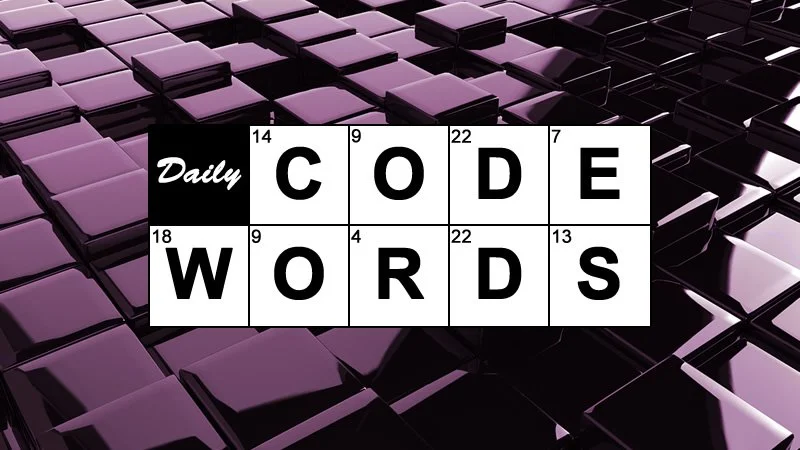
Dagelijks Codewoord completely reconstructs the traditional crossword puzzle genre by brutally stripping away all trivia-based clues and definitions, replacing them with a highly logical, cryptogram-style mathematical substitution cipher, completely localized for Dutch speakers. Set against a clean, visually minimalist grid that visually resembles a standard crossword, players are presented with a massive grid of blank squares. However, the catch is brilliant: every single white square contains a specific number. Each number represents exactly one letter of the Dutch alphabet. Your objective is intensely focused and relies entirely on deductive logic and Dutch vocabulary pattern recognition: you must decode the numerical cipher to fill the entire grid with valid Dutch words. The game usually provides a starting hint (e.g., "14 = E"). From there, you must use your knowledge of common Dutch prefixes, suffixes, and letter frequencies to crack the rest of the code. Offering a fresh set of puzzles every day, this is the ultimate logic routine.
How to Play
- The primary objective is to fill the entire crossword grid with valid Dutch words by decoding the numerical cipher.
- The grid is filled with numbers. Every identical number represents the exact same letter throughout the entire puzzle.
- Use your
Mouseto click on a square in the grid. - Type a letter using your
Keyboardto assign that letter to the selected number. - When you assign a letter, the game will automatically fill in that letter in every single square sharing that number across the board.
- The Deduction Rule: Use your knowledge of Dutch word structure. If you have a word ending in 'E' and the next letter is the most common number, it might be an 'N' (EN).
Tips and Tricks
- Leverage the 'E' First (The Golden Rule): The letter 'E' is overwhelmingly the most common letter in the Dutch language, followed closely by 'N'. Look at the numbers that appear most frequently on the board, particularly at the ends of words. The most frequent number is almost certainly 'E'.
- Hunt for the "EN" Suffix: Plural nouns and verbs in Dutch almost universally end in "EN". If you see a two-number pattern repeating frequently at the ends of longer words, try assigning 'E' and 'N' to them.
- Double Letters: Dutch uses double vowels (AA, EE, OO, UU) and double consonants heavily to dictate pronunciation. Look for identical numbers sitting next to each other.
- The "IJ" Digraph: While sometimes treated as a single letter in Dutch crosswords, if it is split, look for the 'I' and 'J' combination.
- Use Process of Elimination: The game usually displays the alphabet at the bottom of the screen, crossing off letters you have already used. If you need a vowel and 'E' and 'A' are already assigned, your options are drastically narrowed to O, I, U, or IJ.