Poppy Playtime Survival
About Game
The chilling whispers of abandoned dreams often hold the most potent nightmares, and nowhere is this truth more starkly illuminated than within the decaying walls of Playtime Co. In "Poppy Playtime Survival," players are thrust back into the heart of a once-beloved toy factory, now a mausoleum of forgotten laughter and chilling secrets. The premise alone is a masterclass in psychological dread: you, an ex-worker, compelled by an unresolved mystery surrounding the disappearance of your colleagues, return to the very place that once promised joy and creativity. This isn't just a simple ghost hunt; it's a deeply personal excavation of a past that refuses to stay buried, a journey into the dark underbelly of childhood innocence corrupted. The narrative sets a powerful hook, immediately establishing a sense of urgency and a thirst for answers that drives every creaking step through the ominous facility. Why did everyone vanish? What truly happened on that fateful day? These questions loom large, propelling the player through a labyrinth of forgotten workshops and silent corridors.
From the moment you load into "Poppy Playtime Survival," the "well-detailed graphics" immediately assert themselves as a cornerstone of the experience. For a browser title, the visual fidelity is genuinely impressive, crafting an environment that feels both eerily familiar and profoundly alien. Textures are sharp, rendering the peeling paint on walls, the dust motes dancing in sparse light beams, and the grimy industrial machinery with a level of care that belies its platform. The attention to detail extends to the toys themselves – once vibrant and inviting, now scattered, broken, or eerily posed, their vacant stares adding a layer of unsettling realism to the macabre scene. Lighting plays an especially critical role, expertly manipulating shadows and slivers of illumination to create a pervasive sense of unease. Darkened hallways stretch into an oppressive abyss, while sudden flashes of light or the glow of a distant sign can momentarily offer solace or, more often, highlight a new, horrifying detail in the periphery. This sophisticated visual presentation elevates the game beyond a mere jump-scare generator, transforming it into a meticulously crafted horror landscape where every visual element contributes to the overarching sense of dread.
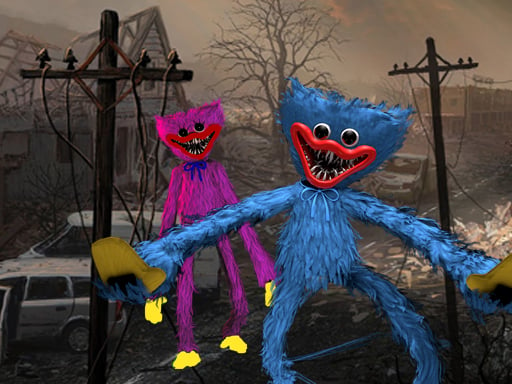
The atmosphere in "Poppy Playtime Survival" is, without exaggeration, its most potent weapon. "Thrilling" barely begins to capture the constant, gnawing tension that permeates every moment spent within Playtime Co. It's a masterclass in sustained psychological horror, built on a foundation of anticipation and vulnerability. The silence itself is heavy, broken only by the player's own footsteps, the distant hum of long-dead machinery, or the subtle creaks and groans of the decaying structure around you. This auditory minimalism makes every unexpected sound — a distant thud, a metallic clang, a faint whisper — acutely unsettling, triggering an immediate surge of adrenaline. The game expertly builds dread not just through explicit threats but through the sheer isolation and the implication of unseen horrors. The factory, once a beacon of childhood dreams, is now a monstrous entity, its vast, empty spaces echoing with untold terrors. You are constantly aware of your vulnerability, the feeling of being watched, hunted. When the antagonist finally makes its appearance, it's not just a creature; it's the physical manifestation of the factory's malevolent spirit, its "creepy red smile" a permanent fixture in the player's nightmares. The blend of environmental storytelling, intelligent sound design, and the ever-present threat culminates in an atmosphere so thick with dread that every step forward feels like a defiant act against an unseen, omnipresent evil. This isn't just a game that has a scary atmosphere; it is the scary atmosphere.
How to Play
Navigating the perilous halls of Playtime Co. in "Poppy Playtime Survival" requires a precise understanding of its core mechanics and intuitive controls, all designed to facilitate a tension-filled exploration and puzzle-solving experience. At its heart, the gameplay loop revolves around meticulous environmental investigation, clever puzzle-solving, and strategic evasion of the factory's monstrous inhabitant. Movement is straightforward yet crucial: players can walk at a cautious pace, bend down to squeeze through tight spaces or hide behind obstacles, and, crucially, run when the situation demands a rapid escape. The ability to sprint is a limited burst of speed, often a desperate measure when the antagonist is hot on your heels, emphasizing the importance of planning and stealth over constant flight. These fundamental movements underpin every interaction, demanding players consider their approach to each new room and corridor.
The game's progression is cleverly structured around a series of interconnected chapters, each incrementally increasing in complexity and danger. Early chapters serve as an extended tutorial, gently introducing the player to the factory's layout and the initial challenges. As you delve deeper, "quests become more difficult," meaning puzzles require more elaborate solutions, exploration becomes more extensive, and the antagonist's presence becomes significantly more pronounced and aggressive. Unlocking new areas is never automatic; it's a reward for successful quest completion, often involving finding specific items, decoding environmental clues, or activating complex machinery. A key mechanic early on is the discovery of cassettes and yellow tapes, which are not just narrative devices but often contain vital information regarding the factory's lore, hints for upcoming puzzles, or even direct instructions on game controls and mechanics presented through in-game "TVs and DVDs." Actively seeking out and engaging with these lore snippets is essential, transforming exposition into an integral part of the survival experience.
The most iconic and indispensable tool in your arsenal is the GrabPack, a special item you receive early in the game. Worn on your back, this device features two extendable hands – one blue, one red – that can be projected across distances. This unique gadget is central to nearly all puzzle-solving and environmental interaction. You'll use it to grab items that are out of reach, whether they're keys perched on high shelves, fuses needed for machinery, or other crucial quest items. Beyond simple retrieval, the GrabPack is indispensable for activating specific mechanisms: many doors and devices throughout the factory are locked with palm-shaped buttons, requiring you to precisely aim and extend one of your GrabPack hands to press them. This mechanic adds a layer of spatial puzzle-solving, as players must find the correct angle and distance to interact with these remote switches. For example, an early quest might involve deciphering a color code for a locked door, with the clues scattered as "colorful toys" throughout the room, requiring both keen observation and clever use of the GrabPack to manipulate the environment and reveal the solution. Mastering the GrabPack is not just about understanding its function, but about integrating it seamlessly into your exploration and puzzle-solving rhythm, making it an extension of your will in this hostile environment.
Our tips
Venturing into the terrifying depths of Playtime Co. requires more than just courage; it demands strategic thinking, keen observation, and a mastery of the game's unique mechanics. To survive the relentless pursuit of the monstrous toy and uncover the factory's dark secrets, consider these in-depth strategies:
-
Embrace Meticulous Exploration: The factory is a vast, dilapidated labyrinth, and every nook and cranny can hold a vital clue. Do not rush through areas, especially in the early chapters. "Search for some colorful toys" is just one example; codes, keys, and narrative context are often hidden in plain sight, disguised as environmental details or tucked away in obscure corners. Before progressing, methodically sweep each room, checking underneath tables, behind machinery, and on top of shelves. The narrative cassettes and yellow tapes, which provide crucial lore and even control tips, are easily missed if you're not actively looking for them. Remember, every piece of information you gather, no matter how small, contributes to your understanding of the factory and its horrors.
-
Master the GrabPack's Versatility: The GrabPack is your lifeline and primary problem-solving tool. While its primary function is to "lengthen to get items that are located higher than you are" and activate "palm shaped button" mechanisms, think beyond these obvious applications. Practice aiming and timing your shots, as some puzzles might require precise activation sequences or quick reflexes. Consider its potential for environmental manipulation – can you use it to move objects, create distractions, or even temporarily block a path (though this might be more speculative for a browser game, it's worth testing the limits). Familiarize yourself with its reach and trajectory, as efficient use of the GrabPack can save precious seconds when under pressure or when solving complex, multi-stage puzzles.
-
Prioritize Stealth and Situational Awareness: "Frightening toys are chasing you," so direct confrontation is not an option. Your survival hinges on remaining undetected or, failing that, making a swift escape. Pay close attention to audio cues – the distinct thud of the antagonist's footsteps, distant growls, or the creaking of floorboards can alert you to its proximity long before you see it. Utilize the "bend down" mechanic to navigate vents and tight spaces quietly, making yourself harder to spot. When you do encounter the monster, assess the environment for immediate escape routes or hiding spots. Running should be a last resort, as it often alerts the antagonist to your precise location, but be prepared to sprint through familiar paths if cornered.
-
Decipher the Lore Tapes Diligently: The "cassettes that are lying around" and the "special TVs and DVDs" are more than just flavor text; they are integral to understanding the factory's "interesting background" and the nature of the "accident." These lore drops often contain subtle hints about puzzle solutions, the antagonist's behavior patterns, or the layout of future areas. By piecing together the narrative, you gain a deeper appreciation for the horror and might even uncover strategies not immediately obvious. Don't skip these moments; they deepen your immersion and provide crucial context that can inform your decisions and strategies.
-
Cultivate Patience and Observation: "Poppy Playtime Survival" is a game that rewards deliberate thought over reckless speed. Rushing blindly into new rooms or through puzzles will inevitably lead to "unexpected screamers" and untimely deaths. Take a moment in each new area to observe your surroundings: identify potential threats, scan for interactive elements, and look for clues embedded in the environment. Many puzzles require logical deduction based on visual information. For example, if a code is needed, there's almost certainly a visual cue nearby, perhaps a sequence of colors on a wall or a set of numbers hidden on a toy. Patience allows you to process information effectively and approach challenges with a clear strategy rather than panicked guesswork.
-
Anticipate and Brace for Jump Scares: The game explicitly promises "unexpected screamers," and they will happen. While you can't always predict the exact moment, you can anticipate when the game is likely to deploy one. Typically, these occur after a period of sustained tension, after solving a major puzzle, or when entering a significant new area. While they are designed to be startling, mentally preparing yourself for the possibility can help you recover faster and maintain your composure. Don't let a jump scare completely derail your focus; use the adrenaline to heighten your awareness for the immediate aftermath.