Medieval Battle 2P
About Game
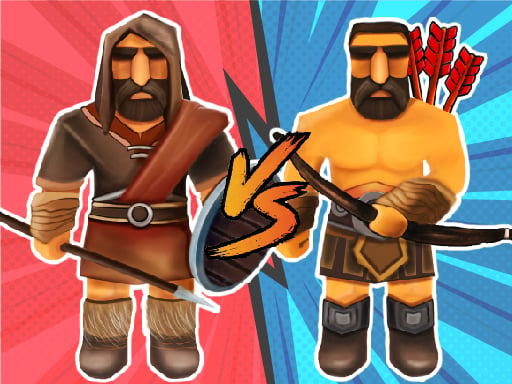
Embarking on a journey through time to the tumultuous battlefields of the Medieval period, Medieval Battle 2P offers players a robust and engaging simulation experience that plunges them directly into the heart of historical conflict. This isn't just another casual browser game; it presents itself as a thoughtfully constructed battle simulator, meticulously designed to challenge tactical prowess and strategic thinking. From the moment you load into its digital arena, the game immediately establishes its core premise: mastering the art of war through the deployment of powerful soldiers and the execution of intelligent battle strategies. While the "time travel" aspect serves primarily as a narrative hook, effectively setting the stage for an era defined by steel and grit, the gameplay itself is firmly rooted in the visceral realities of commanding an army. The aesthetic presentation, though clearly optimized for browser play, manages to convey a surprising depth. Units are rendered with enough detail to distinguish their roles on the battlefield, from the stoic swordsmen to the agile archers, each contributing to a dynamic visual tapestry of combat. The environments, while not overly complex, are functional and serve as excellent backdrops for the skirmishes, often featuring subtle details that enhance the medieval ambiance without cluttering the strategic view. There’s a commendable focus on clarity, ensuring that even amidst the chaos of clashing forces, players can easily track their units and the unfolding battle.
The graphical design decisions in Medieval Battle 2P lean towards a clean, illustrative style that prioritizes readability and impact over hyper-realism, a wise choice for a game intended for broad accessibility. Unit animations, while not Hollywood-level, are crisp and convey the weight and force of their actions, whether it’s a knight’s powerful swing or an archer’s precise shot. Crucially, the visual feedback during combat – hit indicators, ability effects, and unit health bars – is immediate and informative, allowing players to make real-time decisions without ambiguity. This functional elegance is a cornerstone of its appeal, ensuring that the strategic layer is never obscured by visual noise. Complementing this visual clarity is a surprisingly atmospheric sound design that genuinely elevates the experience. The clang of metal, the thud of impacts, and the distant war cries create an immersive audio landscape that pulls you into the fray. Furthermore, the accompanying medieval-inspired soundtrack effectively builds tension during lulls and intensifies during critical engagements, making each push and retreat feel significant. The atmosphere is one of focused intensity, where every decision carries weight, whether you're meticulously planning your next move in single-player mode or desperately trying to outmaneuver a human opponent in the highly addictive two-player mode. The joy of Medieval Battle 2P truly blossoms when engaging with a friend, transforming strategic planning into a real-time test of wit and adaptability, complete with all the exhilarating highs and lows of head-to-head competition.
How to Play
At its core, Medieval Battle 2P operates on a deceptively simple yet profoundly strategic framework. Players are tasked with deploying a variety of medieval units onto a battlefield, typically a single lane or a series of interconnected pathways, with the ultimate goal of destroying the enemy's main stronghold or commander. The game utilizes a resource generation system, often represented as "mana" or "gold," which accumulates steadily over time. Each unit costs a specific amount of this resource, meaning effective resource management is paramount to victory. Units range from basic melee soldiers like swordsmen and spearmen, who serve as your frontline and absorb damage, to ranged units such as archers and crossbowmen, critical for dealing damage from a distance, and potentially heavier, more specialized units like knights or siege engines that act as powerful offensive tools or defensive bulwarks. Understanding the rock-paper-scissors dynamic between these unit types is the first step towards mastery; for instance, archers might be vulnerable to direct melee attacks but devastating against slow, heavily armored targets.
Controls are intuitive and streamlined, designed for the browser environment. Typically, unit deployment is handled via a simple click or drag-and-drop interface, where players select a unit from their available roster and place it on their side of the battlefield. Once deployed, units automatically march forward, engaging any enemy units or structures they encounter. This hands-off combat allows players to focus entirely on the strategic meta-game: when to deploy which unit, where to reinforce, and how to counter the opponent's movements. The game progresses through various stages or waves, with later stages often introducing stronger enemy units or increased resource generation rates, demanding a flexible and evolving strategy. In single-player mode, players face increasingly challenging AI opponents or pre-set scenarios, often with specific objectives beyond mere annihilation, such as defending a point for a set duration or overcoming a numerically superior force through clever tactics. The two-player mode elevates this further, transforming the experience into a dynamic chess match where anticipating and reacting to a human opponent's strategy becomes the ultimate test of skill, often leading to tense back-and-forth engagements that demand constant adaptation and strategic foresight.
Our tips
To truly excel on the battlefields of Medieval Battle 2P, a deep understanding of its strategic nuances is essential. Here are several in-depth tips to help you turn the tide of war in your favor:
- Master Unit Synergy and Counters: Don't just deploy units randomly. Understand that every unit has a purpose and a counter. Spearmen might be excellent against cavalry, but vulnerable to archers. Swordsmen are balanced but can be overwhelmed by sheer numbers. Develop a core army composition that includes a mix of frontline tanks, ranged damage dealers, and perhaps a specialized unit for burst damage or area control. Crucially, observe your opponent's primary unit choices and actively deploy units that counter them. If they're spamming archers, focus on fast-moving melee units to close the distance.
- Resource Management is King: The "mana" or "gold" bar at the bottom of your screen is your lifeline. Resist the urge to constantly deploy units. Sometimes, it's more effective to save up resources for a powerful, high-cost unit that can break through a defensive line, or to deploy a sudden surge of units to overwhelm an unprepared opponent. Learn the optimal timing for unit deployment: deploying too early might mean your units arrive piecemeal and are easily picked off, while deploying too late might leave your defenses vulnerable. A common tactic is to "float" resources, saving up to deploy two or three key units simultaneously for a concentrated push.
- The Art of the Push and Pull: Medieval Battle 2P is often a game of momentum. When you have an advantage, press it hard. Deploy units aggressively to keep the pressure on your opponent's base. However, be prepared to pull back and defend when your opponent mounts a counter-attack. Over-extending can lead to your own downfall. A successful strategy often involves building a strong defensive line first, then using the accumulated resources to launch a decisive, overwhelming offensive wave, often spearheaded by your most powerful units.
- Adapt Your Strategy on the Fly (Especially in 2P): Your initial strategy might be perfect, but a human opponent will rarely stick to a predictable pattern. Observe their unit choices, their deployment timings, and their preferred lanes (if applicable). Are they trying to rush you down? Are they building a slow, impenetrable wall? Adjust your unit composition and deployment strategy accordingly. If they suddenly switch tactics, be ready to pivot immediately. This real-time adaptation is where the true depth of the two-player experience shines.
- Utilize Special Abilities and Upgrades Wisely: Many units will have unique abilities or can be upgraded to gain powerful new traits. Don't forget these! Whether it's a warrior's temporary shield, an archer's volley shot, or a knight's charge, these abilities can turn the tide of a battle if used at the opportune moment. Prioritize upgrades that synergize with your core strategy or address a specific weakness in your army. For instance, if your frontline struggles, invest in durability upgrades. If you need more offensive punch, boost your damage dealers.
- The Power of the Early Game Advantage: Securing an early lead in resource generation or map control (if applicable) can snowball into an insurmountable advantage. Aggressive, well-timed early deployments can force your opponent into a defensive posture, limiting their offensive options and allowing you to dictate the pace of the game. Even small early victories, like taking down a few enemy units without losing any of your own, contribute to this crucial momentum.
- Know When to Sacrifice: Sometimes, a strategic retreat or the sacrifice of a few weaker units can buy you precious time to regroup, accumulate resources, or deploy a stronger counter-force. Don't be afraid to let a small group of units fall if it means saving your more powerful units for a decisive engagement or protecting your base from imminent destruction. It's all about managing the flow of battle and making calculated trade-offs.