One LineVerified
About Game
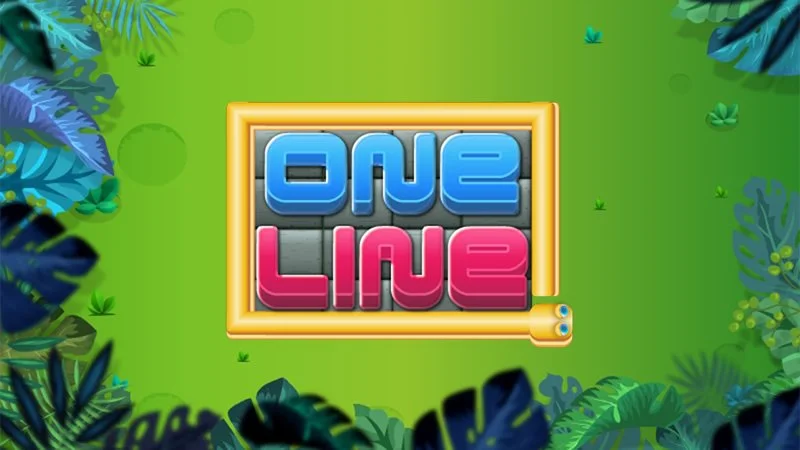
One Line strips the spatial puzzle genre down to its absolute, most mathematically pure and elegantly simple core, delivering a digital adaptation of a deeply complex topological problem (often related to Eulerian paths). Set against a clean, visually minimalist grid that varies wildly in shape—from simple squares to complex, irregular polygons—players are presented with a single starting point. Your objective is intensely focused and brutally unforgiving: you must draw a single, continuous, unbroken line through the grid that physically passes through every single empty cell exactly once. The atmosphere is deeply cerebral and intentionally demanding, requiring an intense level of forward-thinking, spatial visualization, and process of elimination. You cannot lift your "pen," you cannot retrace your steps, and you cannot leave any cell empty. The visual presentation is highly functional, utilizing crisp, neon graphics that track your path, ensuring the complex routing remains perfectly readable. One Line is the ultimate brain-training routine for hardcore logic puzzle fans.
How to Play
- The primary objective is to fill every single empty cell on the board using one continuous line.
- The game usually provides a designated starting cell (often highlighted).
- Use your
Mouseto click and hold theLeft Mouse Buttonon the starting cell. - Drag your mouse to an adjacent cell (up, down, left, or right) to draw the line.
- Continue dragging through the grid, turning corners to navigate the shape.
- The Golden Rule: The line CANNOT cross itself, it CANNOT double back over a cell it has already visited, and it MUST pass through every single playable cell on the board.
- If you trap yourself in a corner, release the mouse or hit the undo button to reverse your path.
Tips and Tricks
- Work the Perimeter First: The absolute most common mistake is driving the line straight through the dead center of the puzzle early on. This almost always cuts the board in half, trapping empty cells on the other side. Always try to hug the outer walls and hug the perimeter for as long as possible.
- Beware the "Choke Points": Look at the overall shape of the board. Are there two massive areas connected by a single, narrow 1-cell wide hallway? You MUST plan your entire route so that you completely finish one area before passing through that choke point, because you can never go back.
- The "Dead End" Deduction: Look for cells that only have ONE possible entrance/exit (like a single cell sticking out of the main block). If a cell only has one connection point, it MUST be the absolute end of your line. You must route your path so you finish in that cell.
- Snake Mentality: Think of the line like the classic game of Snake. You must coil the line tightly against itself, filling every nook and cranny systematically, rather than drawing wild, sweeping loops.
- Work Backwards Mentally: If a puzzle is incredibly complex, start at the designated beginning, but also mentally trace a path backward from any obvious dead-end cells to see where the two lines must eventually meet in the middle.