Merge Melons
About Game
"Merge Melons," at first glance, presents itself as a deceptively simple casual puzzle game, but beneath its vibrant, saccharine exterior lies a surprisingly deep and endlessly engaging experience that captures the essence of classic browser gaming while offering a fresh, modern twist. The premise is as straightforward as it is addictive: players are tasked with combining identical fruits to create progressively larger ones, all within the confines of a vertical container. The ultimate goal, as the name subtly hints, is to synthesize the elusive, massive watermelon, a satisfying culmination of strategic drops and clever merges. This core loop, while easily grasped within seconds, proves to be an incredible time sink, drawing players into a meditative rhythm of planning, reacting, and hoping for that perfect cascade.
Graphically, "Merge Melons" is a masterclass in clean, appealing design, perfectly optimized for the browser experience. The fruits themselves are rendered with a delightful plumpness and glossy finish, each distinct in color and shape, making identification quick and intuitive even in the heat of a rapidly filling container. From the tiny, ruby-red cherries to the majestic, verdant watermelons, every fruit is a miniature work of art, contributing to an overall aesthetic that is both cheerful and inviting. The animations are equally polished; fruits don't just disappear upon merging, they gracefully coalesce with a satisfying "pop" and a subtle visual effect that reinforces the progression. Physics are a key visual component, with fruits bouncing, rolling, and settling realistically, adding an unpredictable yet charming dynamic to each drop. The background, often a subtle gradient or a soft, abstract pattern, is unobtrusive, ensuring that the focus remains squarely on the lively fruit-filled action. This visual clarity is paramount, preventing clutter and maintaining an accessible, eye-pleasing interface that encourages extended play sessions without visual fatigue. It's a game that looks good, feels good, and perfectly embodies the high-quality, instant-play ethos of a premium browser portal.
The atmosphere cultivated by "Merge Melons" is a fascinating blend of serene tranquility and escalating tension. Initially, the game feels like a soothing digital playground, a gentle challenge where each successful merge brings a small burst of dopamine. The implied sound design, though often minimalist in browser games, contributes to this – one can almost hear the soft "plop" of a falling fruit, the gentle chime of a successful merge, or the satisfying "squish" of two fruits becoming one. There's a calming, almost hypnotic quality to the steady stream of fruit drops and the organic way they settle and stack. However, as the container begins to fill, and larger, more unwieldy fruits start to dominate the landscape, that tranquility gradually gives way to a thrilling sense of urgency. The stakes subtly rise as the "game over" line looms closer, transforming the casual puzzle into a nail-biting strategic exercise. It’s this delicate balance between relaxation and mild anxiety that makes "Merge Melons" so compelling; it’s a game you can pick up for a quick, stress-free break, or find yourself immersed in for hours, meticulously planning every drop and celebrating every cascade with genuine triumph.
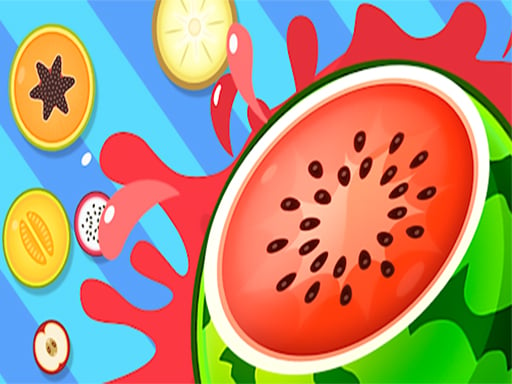
How to Play
At its core, "Merge Melons" operates on a deceptively simple principle that belies its strategic depth: players are presented with a vertical container and a sequence of fruits. The primary mechanic involves dropping individual fruits, one at a time, from the top of the screen into this container. The control scheme is intuitive and perfectly suited for browser play: a simple mouse click or tap dictates where the next fruit will fall. Precision is key here; dragging the mouse before clicking allows players to fine-tune the horizontal drop point, a critical element for advanced strategies. Once dropped, fruits are subject to realistic physics, rolling, bouncing, and settling against other fruits and the container walls. This physical interaction is not merely cosmetic; it's a fundamental part of the puzzle, as fruits can shift and trigger unexpected merges or, conversely, get stuck in undesirable positions.
The titular "merge" mechanic is where the game's challenge truly shines. When two identical fruits touch and settle, they instantly combine into a single, larger fruit, following a predefined progression (e.g., two cherries become a strawberry, two strawberries become a grape, and so on, all the way up to the ultimate watermelon). This newly formed, larger fruit then inherits the physics of its predecessors, potentially rolling or shifting to trigger further merges in a satisfying cascade. The game progresses endlessly, with players continually dropping fruits and aiming for merges, until the fruits pile up and touch the "game over" line at the top of the container. Points are awarded based on the size of the fruit created, with larger merges yielding significantly higher scores. The game's progression is less about increasing difficulty levels and more about the player's evolving skill in managing the ever-filling container. Each game is a race against gravity and limited space, a constant dance of creation and management, pushing players to think several steps ahead to maintain an open board and chase that elusive high score, all while anticipating the next fruit in their queue.
Our tips
Mastering "Merge Melons" requires more than just quick reflexes; it demands strategic foresight and a nuanced understanding of its physics and merging mechanics. Here are 5-7 concrete, in-depth strategies to help you navigate the fruity chaos and achieve those coveted high scores.
-
Prioritize the Bottom-Up Merge: This is arguably the most crucial strategy. Always strive to make your largest fruit merges happen at the very bottom of the container. If you create a large fruit high up, it can easily get stuck between smaller fruits, becoming an immovable obstacle that blocks future merges and rapidly fills your play area. By keeping the heaviest fruits at the base, you maintain a more stable foundation and provide more room above for subsequent merges. This often means patiently building up smaller chains at the bottom corners before dropping the critical fruit that triggers a large merge.
-
Utilize the Edges and Corners for Staging: Don't view the container as just a central dropping zone. The left and right walls, as well as the bottom corners, are invaluable staging areas. You can often stack smaller fruits (like cherries or strawberries) in these less-trafficked zones, waiting for their matching counterpart to arrive. This keeps the critical central area clear for larger drops and more dynamic merges, reducing the risk of premature game overs and allowing you to set up multi-step combinations without cluttering the prime real estate.
-
Maintain an Open Central Channel: While staging fruits in corners is smart, the center of your container should ideally remain as open and unobstructed as possible. This "central channel" is where you'll want to drop your larger, more impactful fruits, especially those that trigger cascades. An open center provides the necessary space for fruits to roll, settle, and connect, maximizing the chances of chain reactions and preventing fruits from getting "trapped" without a clear path to their match or to the bottom.
-
Understand and Exploit the Fruit Progression Sequence: The game always follows a fixed merging sequence (e.g., Cherry -> Strawberry -> Grape -> Orange -> Apple -> Pear -> Peach -> Pineapple -> Melon -> Watermelon). Internalize this sequence. Knowing what fruit comes after a merge allows you to plan your drops more effectively. If you're about to make an orange, immediately think about where its next potential partner (another orange) might come from, or where you can position it to form an apple. This forward-thinking approach is vital for setting up long-term merge chains.
-
Precision Dropping and Anticipating Physics: Avoid haphazardly dropping fruits. Each drop should be a calculated decision. Pay close attention to how fruits settle and roll. A fruit dropped slightly off-center might bounce off another fruit and roll into a perfect merge, or it might get stuck. Experiment with subtle horizontal adjustments before dropping to predict the fruit's trajectory. Sometimes, dropping a fruit next to its match, rather than directly on it, can cause a beneficial roll that clears space or triggers a cascade you hadn't initially seen.
-
Avoid Isolated, Large Fruits: A single, large fruit (like a pineapple or a melon) stranded high up and away from its potential match is a death sentence. These fruits take up immense space and are difficult to move. If you find yourself in this situation, prioritize creating its match as quickly as possible, even if it means making a few suboptimal smaller merges to clear a path. Prevention is better than cure here, so always plan where your larger merges will land.
-
Manage the "Game Over" Line with Strategic Clearing: As fruits approach the top of the container, panic can set in. Instead, focus on efficient clearing. Prioritize making any available merges, especially those involving smaller fruits, near the danger line. Small merges reduce overall volume quickly and can open up crucial space. Sometimes, sacrificing a potentially larger, more complex merge to clear immediate threats near the top is the smarter play to extend your game and allow for future high-scoring opportunities.