
Why Cozy Games Are Taking Over
In an era saturated with high-octane competitive shooters, sprawling open-world RPGs demanding hundreds of hours, and adrenaline-fueled action titles, a quieter revolution has been brewing in the gaming world. The once-niche genre of "cozy games" – characterized by their low-stress gameplay, gentle aesthetics, and emphasis on creativity, exploration, and community – has not merely carved out a space but is actively taking over a significant portion of the digital landscape. This isn't just a fleeting trend; it's a profound shift in player preference, reflecting a deeper yearning for tranquility, purpose, and genuine connection in a world often defined by chaos and competition.
The Allure of Simplicity: Deconstructing the Farming Sim Boom
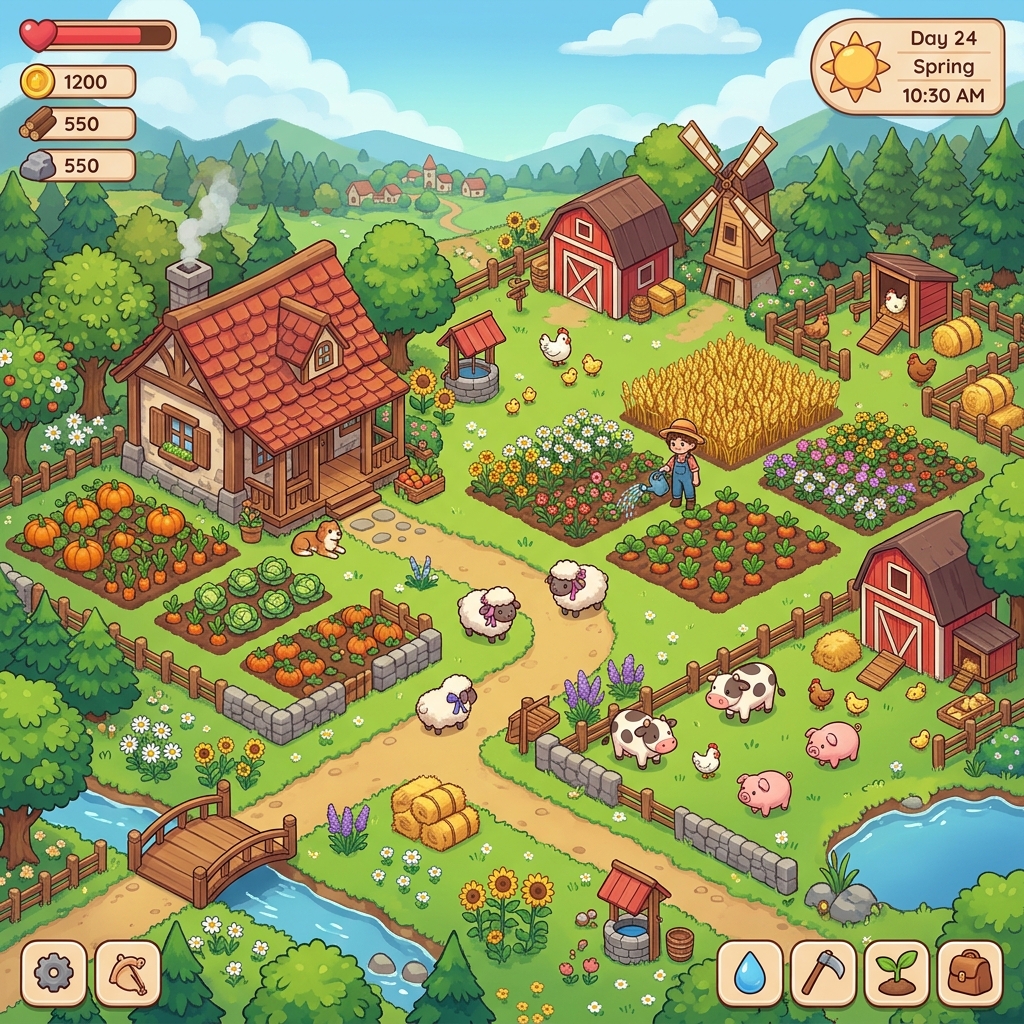
The undeniable cornerstone of the cozy game phenomenon is the farming simulator. What began as a quaint, niche interest has exploded into a global sensation, with titles like Stardew Valley and Animal Crossing: New Horizons achieving commercial success rivaling AAA blockbusters. This isn't just about planting digital seeds; it’s about cultivating a digital life, a peaceful existence away from the pressures of the real world.
From Pixelated Plots to Digital Sanctuaries
The lineage of farming sims stretches back to the Harvest Moon series, captivating players with its simple premise: inherit a rundown farm, restore it to glory, build relationships, and live a fulfilling life. Stardew Valley, a spiritual successor, perfected this formula, adding layers of depth, customization, and endearing characters, all wrapped in a charming pixel art aesthetic. The "lore," if one can call it that, of these games is incredibly profound in its simplicity. It's the universal human desire for self-sufficiency, for a tangible connection to the earth, and for the satisfaction of seeing the fruits of one's labor. Players aren't just growing virtual crops; they are nurturing a sense of belonging in a tight-knit community, contributing to its well-being, and leaving a legacy through their farm and relationships. The cyclical nature of seasons, the anticipation of harvests, and the quiet rhythm of daily chores provide a comforting predictability that is deeply therapeutic.
Gameplay speculation for the future of this subgenre suggests an even deeper integration of ecological systems, moving beyond simple crop rotation to dynamic soil health, realistic weather patterns influencing yields, and even player-driven market economies that respond to supply and demand within the game's world. Imagine a farming sim where your sustainable practices genuinely impact the health of the surrounding digital ecosystem, leading to unique rare flora or fauna appearing on your land, or where local villagers' livelihoods are visibly improved by your produce. Yet, crucially, these advancements would be implemented with the same gentle touch, ensuring that complexity adds to immersion rather than escalating stress. We might see generational farming, where decisions made by your original character influence the starting conditions and challenges for their children or grandchildren, lending an even greater sense of long-term purpose and legacy.
The Anti-Grind Philosophy
What truly sets farming sims apart is their deliberate rejection of the conventional "grind" prevalent in many modern games. There are no explicit bosses to defeat, no endless power-leveling loops required to stay competitive, and certainly no pay-to-win mechanics dictating progress. Instead, the "rewards" are intrinsic: the satisfaction of a perfectly organized farm, the joy of completing a rare collection, or the warmth of a heartfelt dialogue with a befriended NPC. The progression is entirely player-driven; you can spend an entire in-game year fishing, mining, or simply decorating your house without feeling like you're falling behind. This anti-grind philosophy is a breath of fresh air for players burnt out by the incessant demands of other genres.
As a fictional lead designer for "Evergreen Acres," a hypothetical next-gen farming sim, might put it: "Our core design principle was to empower the player to define their own success. We meticulously crafted a world where the joy comes not from conquering, but from cultivating. We wanted to create a space where the player dictates their own pace, where success isn't measured in DPS numbers or kill-death ratios, but in the satisfaction of a perfect harvest, the warmth of a newly formed friendship, or the simple beauty of a sunset over your digital farm. The real victory is the peace you find within the game." This ethos permeates the genre, creating games that prioritize well-being over challenge.
Beyond Farming: The Expanding Universe of Relaxing Games
While farming sims paved the way, the definition of a "cozy game" has broadened considerably, encompassing a vast array of experiences that prioritize relaxation, creativity, and thoughtful engagement over high stakes. This expansion demonstrates a fundamental shift in what players seek from their interactive entertainment.
Crafting, Exploration, and Gentle Puzzles
The universe of relaxing games now includes titles like A Short Hike, a charming exploration game about climbing a mountain and finding inner peace; Spiritfarer, an emotional management game about ferrying spirits to the afterlife; Unpacking, a meditative experience of unpacking boxes and setting up a new home, revealing a life story through objects; and even the surprisingly therapeutic PowerWash Simulator, which finds deep satisfaction in the meticulous cleaning of digital grime. These games aren't about winning or losing; they're about the journey, the process, and the quiet satisfaction of completion.
Gameplay speculation for this broader category points towards an increasing sophistication in tactile feedback and sensory immersion. Imagine a crafting game where the haptic feedback perfectly mimics the feel of carving wood or knitting yarn, or an exploration game where the rustle of leaves and the distant calls of wildlife are dynamically generated to create an ever-evolving, tranquil soundscape. These games prioritize atmosphere and emotional resonance. Unpacking's "lore," for instance, isn't explicitly stated but profoundly felt – it's the quiet narrative of a life unfolding through the objects accumulated and placed, a poignant reflection on memory and identity. Spiritfarer's deep themes of loss, empathy, and closure are presented through gentle gameplay mechanics, allowing players to process complex emotions in a safe, low-pressure environment.
From a technical analysis perspective, the success of these games often lies in subtle but powerful design choices. UI/UX is meticulously crafted to be intuitive and unobtrusive, minimizing frustration. Environmental sound design is paramount, utilizing binaural audio to create immersive, calming soundscapes. Soft, inviting color palettes and lighting often eschew harsh contrasts, contributing to a visually soothing experience. Modern game engines allow for incredibly detailed, yet non-threatening, environments where every leaf and ripple can be rendered with fidelity, enhancing the sense of presence without demanding high-stress performance. The animation systems in games like PowerWash Simulator are engineered to make the act of cleaning feel physically satisfying, with particles and water effects meticulously designed to provide gratifying visual feedback. Even subtle details like the way items snap into place or the gentle sway of character movement contribute to an overall sense of calm and control. Procedural generation in exploration games is often tuned to create aesthetically pleasing, navigable spaces rather than challenging mazes, ensuring discovery is a reward, not a chore.
A Haven from Toxicity: The Appeal of Peaceful Multiplayer and Solitude
Perhaps one of the most compelling reasons for the rise of cozy games is their explicit or implicit stance against the rampant toxicity that plagues much of the competitive multiplayer landscape. For many, gaming has become synonymous with verbal abuse, aggressive competition, and the pressure to perform. Cozy games offer a much-needed sanctuary.
The Rejection of Competitive Arenas
The allure of cozy games is intrinsically linked to a rejection of the high-stakes, often hostile environments found in games like League of Legends, Call of Duty, or Overwatch. Players are tired of being screamed at, blamed, or subjected to hateful rhetoric simply for not performing optimally. Cozy games, by their very nature, sidestep these issues. Many are single-player experiences designed for quiet contemplation. For those that do offer multiplayer, the emphasis is overwhelmingly on cooperation, shared creativity, and positive social interaction.
As a fictional developer for a new cozy MMO might state: "From day one, our goal for multiplayer was never about leaderboard dominance or kill counts. It was about fostering genuine connection and shared joy. We actively design against any mechanics that could foster antagonism or direct competition among players. We believe gaming can be a force for positive social interaction, where players help a friend build their dream island, collaborate on a community project, or simply explore a beautiful world together. We prioritized a 'play-together, not against each other' philosophy in every aspect of our design." This philosophy directly addresses a gaping void in the gaming market.
Community Over Competition
Games like Animal Crossing: New Horizons perfectly exemplify the power of peaceful multiplayer. Players visit each other's islands to trade items, exchange design ideas, or simply enjoy the company. There’s no advantage to be gained by sabotaging another player; instead, the rewards come from generosity and collaboration. Similarly, emerging titles like Palia and Fae Farm blend elements of traditional MMOs with a distinctly cozy aesthetic, focusing on farming, crafting, and building communities with other players rather than engaging in endless combat. While they might include light combat or questing, their core social loops are designed to be cooperative and supportive.
Technical analysis reveals how these positive interactions are engineered. Multiplayer systems in cozy games often feature robust filtering for text chat and frequently omit voice chat entirely, a deliberate choice to prevent harassment. Matchmaking, where it exists, might prioritize connections with friends or simply place players into shared public spaces without forced interaction, allowing organic connections to form. The absence of competitive leaderboards or public performance metrics removes pressure and comparison. Server architecture for cozy multiplayer is designed for persistent, low-stress environments where players can drop in and out without disrupting the experience, prioritizing stability and accessibility over ultra-low latency for competitive play. The "lore" of these multiplayer games often revolves around the utopian ideal of a harmonious community, where everyone contributes their unique skills and supports each other, fostering a sense of collective achievement and belonging. This creates an environment where digital friendship can truly flourish, free from the toxicity that has become endemic elsewhere.
The Psychological Underpinnings: Why We Crave Comfort
The surge in popularity of cozy games is not merely a reaction to external factors like game toxicity; it's also deeply rooted in fundamental psychological needs, particularly pronounced in the contemporary world.
Escapism and Stress Reduction
In an increasingly demanding and often overwhelming world – marked by global pandemics, economic uncertainties, political turmoil, and constant digital information overload – cozy games offer a potent form of escapism and stress reduction. They provide a safe, predictable, and controllable environment where players can disengage from real-world anxieties. The dopamine hit derived from completing small, achievable goals – harvesting crops, catching a rare fish, organizing a digital inventory – is powerful, offering a consistent sense of accomplishment without the accompanying adrenaline, frustration, or stress often associated with more challenging games. This makes them a form of genuine self-care, a digital spa for the mind.
Nostalgia and the Comfort of the Familiar
Many cozy games cleverly tap into a wellspring of nostalgia. Their charming, often non-realistic art styles, reminiscent of children's storybooks or classic pixel art, evoke a sense of childhood wonder and simpler times. The themes of building, nurturing, and community often resonate with idealized versions of small-town life or pastoral tranquility. This connection to the familiar and the innocent provides a profound sense of comfort and security. Furthermore, the emphasis on routine and predictable cycles within these games – the changing seasons, the daily chores – offers a grounding presence in a chaotic and unpredictable real world, providing a psychological anchor and a sense of order.
Conclusion
The ascendancy of cozy games is far more than a passing fad; it represents a significant and enduring evolution in the gaming landscape. Driven by a collective yearning for simplicity, relaxation, and genuine connection, players are actively seeking out experiences that offer respite from the pressures of both the digital and physical worlds. From the meticulous cultivation of digital farms to the gentle exploration of whimsical landscapes, and the deliberate rejection of multiplayer toxicity, cozy games are fulfilling a deep psychological need for comfort, purpose, and positive interaction. This isn't just a niche genre; it's a rapidly expanding pillar of the industry, demonstrating that profound satisfaction can be found not in conquest, but in cultivation; not in high scores, but in harmonious living; not in conflict, but in community. As the world continues to accelerate, the gentle embrace of cozy games will only become more vital, offering a much-needed haven where players can unwind, create, and simply be. Their quiet revolution is set to redefine what it means to "win" in the digital age, proving that sometimes, the greatest victory is simply finding peace.