
The Unsung Heroes of Low-Spec Gaming: Thriving in 2026
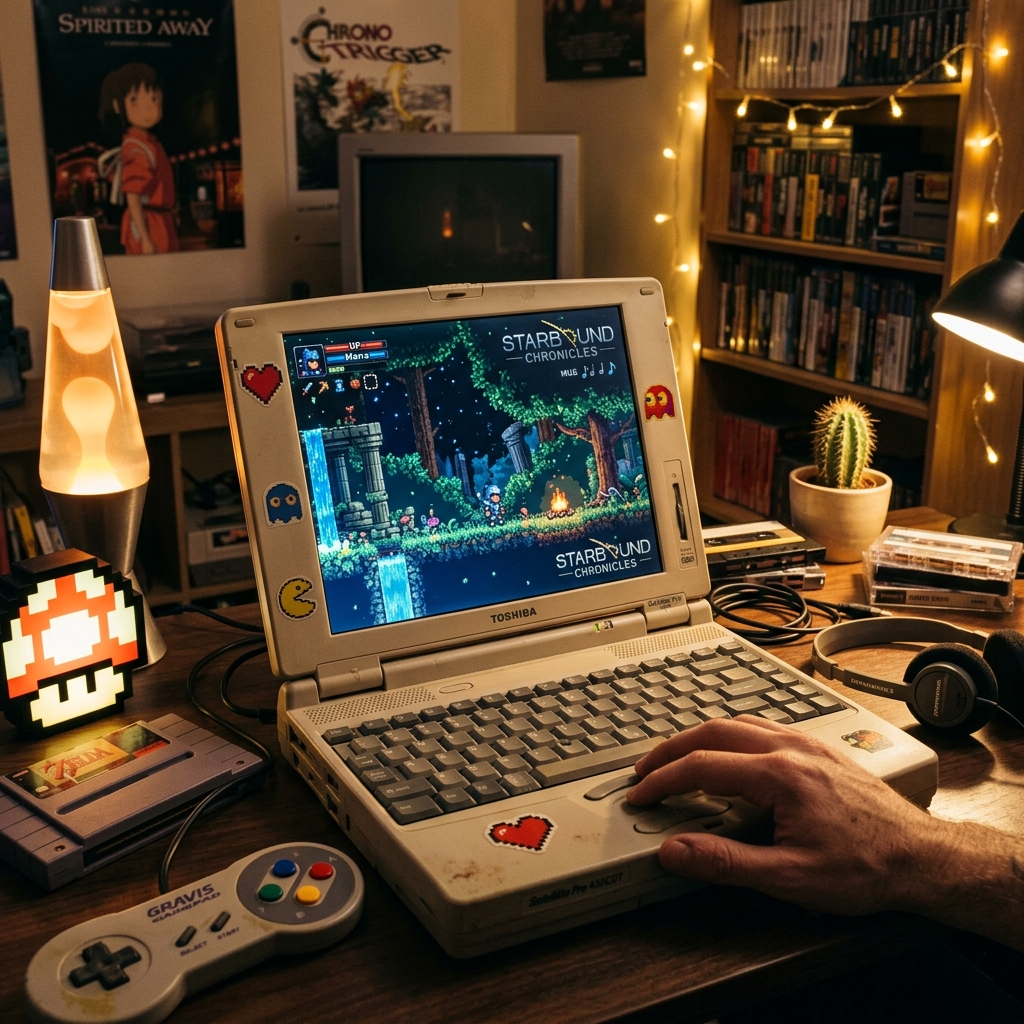
In an era dominated by ray tracing, hyper-realistic textures, and ever-escalating hardware demands, it's easy to forget that the heart of gaming doesn't always beat with the latest GPU. For countless players around the globe, and indeed for anyone seeking an accessible, affordable entry point into the digital realms, the humble integrated graphics chip remains the unsung hero. As we cruise into 2026, the landscape of low-spec gaming isn't just surviving; it's thriving, fueled by a rich tapestry of timeless classics, ingenious indie innovations, and a burgeoning community dedicated to optimization and accessibility. This article delves deep into ten exemplary titles that not only run flawlessly on integrated graphics but offer experiences so profound, so engaging, and so utterly captivating that they often eclipse their graphically intensive counterparts. These aren't just games; they are monuments to brilliant design, proving that creativity and compelling mechanics will always triumph over raw pixel count.
The Enduring Appeal of Accessibility
The pursuit of peak performance often overshadows the joy of simple play. In 2026, with the rapid evolution of technology, integrated graphics solutions have become remarkably capable for their class, yet dedicated gaming GPUs still command premium prices. This creates a sweet spot for games designed with efficiency in mind, allowing millions to partake in rich interactive experiences without breaking the bank on a high-end gaming rig. The titles below represent the pinnacle of this philosophy, demonstrating that immersive worlds, deep narratives, and challenging gameplay are universally achievable, regardless of your hardware specifications.
1. Stardew Valley
Lore Analysis: At its core, Stardew Valley presents a poignant narrative of escape and rebirth. The player character, disillusioned with the soulless grind of the Joja Corporation, inherits a dilapidated farm from their grandfather, a symbolic gesture urging a return to nature and community. The valley itself is steeped in a quiet history, from the ancient Dwarven and Shadow People civilizations hinted at in the mines, to the lingering magic of the Junimos and the various spirits inhabiting the land. Each NPC carries their own intricate backstory, often riddled with personal struggles, dreams, and the subtle melancholy of life in a small, interconnected town. The conflict between the capitalist encroachment of JojaMart and the preservation of Pelican Town's communal spirit forms a powerful, underlying commentary on modern society's choices.
Gameplay Speculation: Stardew Valley’s gameplay loop is a masterclass in emergent narrative and player agency. Beyond farming, mining, fishing, and foraging, the social simulation aspect is incredibly deep. Players speculate about future updates expanding on late-game content, perhaps introducing new regions accessible via advanced crafting, or even deeper lore dives into the origins of the magical elements. Imagine a more complex political system within Pelican Town, where player choices could sway the outcome of elections or community projects, further empowering the "return to nature" theme. The enduring appeal lies in its infinite replayability, where each playthrough offers new relationships, different farm layouts, and unique challenges, all contributing to a personalized journey of self-discovery.
Technical Analysis: Developed primarily by a single person, Eric Barone (ConcernedApe), Stardew Valley is a testament to efficient design. Its pixel-art aesthetic is not merely a stylistic choice but a fundamental component of its low-spec compatibility. The game utilizes a relatively simple 2D engine, minimizing complex shader operations and demanding physics calculations. Textures are small, and character models are sprite-based, requiring minimal VRAM. Even with extensive farms, hundreds of crops, and numerous animals, the game maintains a smooth framerate on integrated graphics due to excellent optimization and the engine's inherent lightweight nature. It’s a prime example of how artistic vision can circumvent hardware limitations.
Fictional Developer Quote: "From the outset, my vision for Stardew Valley was an experience accessible to everyone, regardless of their PC specs. The pixel art wasn't just nostalgia; it was a deliberate design decision to ensure that the core gameplay – the joy of growing, connecting, and exploring – was never bottlenecked by graphical demands. We wanted players to lose themselves in the rhythm of the valley, not in endless settings menus. That it runs so beautifully on integrated graphics even in 2026 is a source of immense pride, proving that heart and mechanics can always triumph over polygons."
Relevance in 2026: Stardew Valley remains a cultural touchstone. Its continuous updates, robust modding community, and timeless charm ensure its place as a top-tier low-spec game. The ever-present desire for a relaxing, meaningful escape from the digital noise of modern life makes its appeal evergreen. It's a game that offers solace, creativity, and a profound sense of accomplishment, all while demanding virtually nothing from your hardware.
2. Terraria
Lore Analysis: Terraria's lore is an emergent tapestry woven from its expansive biomes, diverse creatures, and enigmatic bosses. The world is a battleground between primordial forces of light and dark, represented by the Hallow and Corruption/Crimson. The Guide's cryptic hints and the mysterious Dungeon Guardian suggest a deeper, cataclysmic history. The ancient evils like Cthulhu, fragmented and scattered across the world, hint at a forgotten pantheon and a world scarred by unimaginable power. Each boss slain, each new ore discovered, unravels a tiny thread of this cosmic horror and heroic resilience, inviting players to piece together their own understanding of this vibrant yet dangerous world.
Gameplay Speculation: Terraria is often described as "2D Minecraft," but that vastly undersells its combat depth, item variety, and boss progression. Players constantly speculate about new post-Moon Lord content, perhaps delving into outer space or alternate dimensions. The crafting system is incredibly robust, allowing for thousands of unique items and architectural marvels. The sheer freedom to build, explore, and fight ensures every playthrough feels fresh. The community often dreams of more dynamic world events, deeper NPC interactions, or even customizable "hardmode" modifiers that further alter the world's challenges and rewards, pushing the boundaries of its already immense replayability.
Technical Analysis: Like Stardew Valley, Terraria leverages a pixel-art aesthetic and a 2D engine, making it incredibly lightweight. Its procedural generation, while creating massive worlds, is optimized to render only what's visible, efficiently managing memory and CPU cycles. The game's engine excels at handling numerous entities on screen simultaneously, from hundreds of projectiles during boss fights to swarms of enemies, without significant performance drops on integrated graphics. This efficiency stems from smart asset management and a focus on sprite-based animations, which are far less taxing than 3D models and complex physics.
Fictional Developer Quote: "From the very first line of code, Terraria was designed to be an adventure for everyone. We knew the scope of our ambition – a world teeming with life, danger, and endless possibilities – but we also understood the importance of accessibility. Our pixel art isn't just a style; it's a promise of performance. It allowed us to pack incredible depth into every block and monster without demanding high-end hardware. To see players still discovering new secrets and building breathtaking structures on their integrated graphics in 2026 is proof that boundless imagination doesn't require a boundless budget."
Relevance in 2026: Terraria's "Journey's End" update solidified its status as a complete, polished masterpiece, yet its active modding scene and dedicated player base continue to expand its horizons. Its unique blend of exploration, combat, and building offers hundreds, if not thousands, of hours of content that remains fresh and engaging for integrated graphics users.
3. Minecraft (Java Edition)
Lore Analysis: Minecraft’s lore is famously sparse and emergent, yet deeply evocative. The enigmatic Endermen, the ancient fortresses beneath the surface, the mysterious strongholds, and the cryptic messages from "Herobrine" (a community-created legend) all contribute to a sense of a world with a forgotten past. The existence of the End and the Nether, distinct dimensions with their own creatures and biomes, hints at a multi-verse or a fractured reality. The player’s journey, culminating in the defeat of the Ender Dragon, feels like a rite of passage, an assertion of humanity’s will against primeval forces, even if the "why" remains largely a mystery.
Gameplay Speculation: Minecraft’s sandbox nature means gameplay speculation is endless. Players constantly push the boundaries of redstone engineering, create mind-bending survival challenges, and craft entire cities. Future updates could delve deeper into the lore of ancient builders, perhaps offering more narrative quests within the survival mode. The community is always dreaming of more diverse biomes, new magical systems, or even the ability to create more complex, automated societies within the game. The very essence of Minecraft is its invitation to imagine and create, making its gameplay truly boundless.
Technical Analysis: While Minecraft can be surprisingly demanding with high render distances and complex shaders, its core Java Edition is remarkably scalable. With judicious settings (lower render distance, fast graphics), it runs very well on integrated graphics. Its block-based world, while vast, is rendered using simple geometry and textures. Crucially, the Java Edition benefits immensely from community optimizations like Optifine, which provides fine-grained control over graphical settings, drastically improving performance on low-end hardware. The game's reliance on CPU for world generation and entity processing means a good integrated graphics chip often comes paired with a capable CPU, further aiding its performance profile.
Fictional Developer Quote: "When we first conceived Minecraft, the core idea was freedom – freedom to build, freedom to explore, freedom to imagine. We wanted it to run on almost anything, allowing anyone, anywhere, to dive into infinite worlds. The blocky aesthetic wasn't just a style; it was an architectural decision for accessibility. Years later, even in 2026, with all the advancements, the sheer scalability of Minecraft, especially with community tools like Optifine, means that powerful integrated graphics chips can still deliver an incredible experience. That universality is something we're incredibly proud of."
Relevance in 2026: Minecraft's cultural impact is unparalleled. It's not just a game; it's a platform for creativity, education, and community. Its continuous updates, massive modding scene, and timeless appeal ensure it remains a top choice for integrated graphics users, offering infinite worlds to explore and build within.
4. Hollow Knight
Lore Analysis: Hollow Knight presents a masterclass in environmental storytelling. The kingdom of Hallownest is a fallen empire, ravaged by a mysterious plague known as the Infection. The player, a silent, nameless Knight, is a vessel created to contain this blight. The lore is drip-fed through cryptic dialogue, ancient tablets, and the decaying ruins of a once-magnificent civilization. The tragedy of the Pale King's hubris, the suffering of the Hollow Knight, and the stoic resilience of the few remaining survivors paint a haunting picture of a world desperately clinging to life. It's a poignant exploration of duty, sacrifice, and the cyclical nature of decay and rebirth.
Gameplay Speculation: Hollow Knight’s precise platforming and challenging boss battles are complemented by a deep sense of exploration. Players constantly speculate about the true nature of the Void, the ultimate fate of characters like Hornet, and the possibility of new areas or even entirely different kingdoms. The "Metroidvania" design encourages extensive backtracking and discovery, rewarding curiosity with new abilities and narrative insights. The community often dreams of a "true" sequel that expands on the existing lore, perhaps allowing players to explore Hallownest before its fall, or venturing into the lands beyond its borders.
Technical Analysis: Team Cherry's masterful art direction allows Hollow Knight to punch far above its weight visually without demanding high-end hardware. The hand-drawn, sprite-based characters and environments possess immense detail and atmosphere. The game utilizes a relatively simple 2.5D perspective, which minimizes the need for complex 3D rendering pipelines. Optimization is key: efficient asset loading, clever use of parallax scrolling for depth, and streamlined animation systems ensure smooth performance. The beautiful visual effects, like the particle systems for spells or dust motes, are carefully balanced to be impactful without taxing integrated GPUs.
Fictional Developer Quote: "From the ink on the concept art to the final boss battle, our goal for Hollow Knight was to create a hand-crafted world that felt alive, mysterious, and challenging. We deliberately chose a 2D aesthetic not just for its beauty, but for its efficiency. We poured our energy into every animation frame and every environmental detail, ensuring that integrated graphics users could experience Hallownest exactly as we envisioned it – smooth, atmospheric, and utterly immersive. The art does the heavy lifting, not the raw pixel count."
Relevance in 2026: Hollow Knight is widely considered one of the greatest indie games ever made. Its challenging gameplay, evocative world, and deep lore continue to attract new players. With its highly anticipated sequel, Silksong, still on the horizon, the original's legacy as a low-spec masterpiece remains strong, offering hundreds of hours of exploration and combat.
5. RimWorld
Lore Analysis: RimWorld’s lore is not pre-written but emergent. Each colony is a unique story generator, born from the clash of distinct pawn backstories, random events, and the player's choices. Was your cybernetically enhanced assassin from a glitterworld stranded alongside a tribal hunter and a corporate executive? Their interactions, rivalries, and eventual bonds form the narrative. The various factions, from advanced spacefarers to cannibalistic tribes, hint at a vast, diverse galaxy with its own complex politics and history. The game's "AI Storyteller" actively shapes this narrative, throwing curveballs and dramatic twists, making every playthrough a unique epic of survival, betrayal, and triumph.
Gameplay Speculation: RimWorld's gameplay is a complex simulation of colony management, survival, and emergent storytelling. Players constantly theorize about advanced AI storytellers, new biomes, or even more intricate social systems that could lead to full-blown interstellar conflicts or diplomatic exchanges. The incredibly active modding community constantly pushes the boundaries, adding everything from new factions and technologies to completely overhauled combat systems. The dream is often to expand the simulation to a galactic scale, allowing players to manage multiple colonies or even influence the fate of entire star systems.
Technical Analysis: RimWorld's top-down, isometric perspective and relatively simple 2D sprite art are key to its low-spec performance. The game's complexity lies in its simulation engine, which is primarily CPU-bound, tracking countless pawn thoughts, needs, and environmental interactions. The graphical demands are minimal: simple textures, clear UI, and efficient rendering of numerous entities without complex lighting or shadows. Even in late-game colonies with dozens of pawns and extensive structures, the game remains playable on integrated graphics because the GPU's role is largely to draw pre-rendered sprites and tiles, not to compute complex 3D scenes.
Fictional Developer Quote: "When designing RimWorld, our focus was always on the simulation's depth and the stories that would spontaneously generate from it. We understood that a complex simulation could be CPU-intensive, but we were adamant that the visual representation should be light. The top-down view and 2D sprites were deliberate choices to ensure that the hardware bottleneck would never be the GPU. Even in 2026, with the sheer intricacy of our simulation, integrated graphics handle the visual load beautifully, letting players focus on the drama unfolding on their screen, not on their framerate."
Relevance in 2026: RimWorld continues to evolve with major expansions and a hyper-active modding community. Its unparalleled emergent storytelling and deep simulation mechanics make it an infinitely replayable experience. It's a game where every playthrough generates a unique, compelling narrative, making it a must-have for integrated graphics users seeking deep strategy and management.
6. Slay the Spire
Lore Analysis: Slay the Spire offers a minimalist, yet intriguing, lore. The player character, one of four distinct heroes, ascends a mysterious, monstrous Spire, each floor teeming with increasingly dangerous creatures and enigmatic events. The creatures themselves hint at a forgotten, magical ecology, while the relics found along the way occasionally offer glimpses into past adventurers or the Spire's arcane origins. The ultimate goal – to conquer the heart of the Spire – suggests a deeper, perhaps existential, struggle against a pervasive evil, though its exact nature is left largely to player interpretation, enhancing its enigmatic charm.
Gameplay Speculation: Slay the Spire’s deck-building roguelike mechanics are incredibly polished. Players constantly debate optimal card synergies, relic combinations, and character strategies. Future expansions could introduce new character classes, each with unique mechanics, or perhaps entirely new "Acts" with different enemies, bosses, and environmental hazards. The community often dreams of a "meta-progression" system that subtly alters the Spire's challenges based on cumulative playthroughs or a cooperative multiplayer mode that allows for shared deck-building and strategic combat against escalating threats.
Technical Analysis: As a 2D, turn-based card game, Slay the Spire has incredibly low system requirements. Its animations are fluid but not graphically intensive, relying on sprites and simple particle effects. The game engine efficiently manages card assets, enemy models, and UI elements. Since battles are turn-based, there's no demand for real-time physics or rapid rendering of complex scenes. This makes it an ideal title for integrated graphics, where the GPU simply needs to render a few static backgrounds, character sprites, and card art, consuming minimal VRAM and processing power.
Fictional Developer Quote: "When we set out to create Slay the Spire, our focus was squarely on the tactical depth and replayability of the deck-building roguelike genre. We wanted the mechanics to shine, unburdened by graphical demands. Our art style, while distinctive, was chosen for clarity and efficiency, ensuring that every card, every enemy, was instantly recognizable without taxing the GPU. Even in 2026, as integrated graphics chips grow more powerful, Slay the Spire continues to deliver an uncompromised, strategic experience on even the most modest hardware, proving that genius gameplay truly needs very little visual flourish."
Relevance in 2026: Slay the Spire has set the benchmark for deck-building roguelikes. Its perfectly balanced mechanics, deep strategic options, and endless replayability make it a perennial favorite. For integrated graphics users, it offers an unparalleled strategic depth that can easily consume hundreds of hours.
7. FTL: Faster Than Light**
Lore Analysis: FTL’s lore is implicitly woven into its desperate narrative. Humanity is at war with the Rebel Fleet, an oppressive galactic force. The player, commanding a lone starship, carries vital intelligence that could turn the tide. The universe itself is a tapestry of diverse alien races—Engi, Mantis, Rockmen, Zoltan—each with their own cultures, technologies, and often conflicting interests. Derelict ships and distressed signals hint at countless untold stories of conflict, exploration, and the harsh realities of space survival. The game’s rogue-lite structure reinforces the high stakes: every run is a unique chapter in a sprawling, dangerous galaxy.
Gameplay Speculation: FTL's real-time-with-pause combat and resource management are incredibly addictive. Players constantly theorize about new ship types, alien races, or even more intricate branching narratives within sectors. The community often dreams of an expanded "campaign" mode with more persistent upgrades or a deeper exploration of the galaxy's political landscape. Imagine a system where you could influence the outcome of sector-wide conflicts or even participate in multi-ship fleet battles. The core loop of adapting to new challenges and making split-second decisions ensures infinite replayability.
Technical Analysis: FTL uses a top-down, 2D perspective with sprite-based ships and crew, making it incredibly lightweight. The graphical demands are minimal, focusing on clear UI elements, simple particle effects for weapons fire, and distinct ship designs. The game's engine excels at managing numerous real-time calculations for combat, power distribution, and crew actions, but these are CPU-bound, not GPU-bound. Even with multiple ships on screen firing dozens of projectiles, integrated graphics chips can easily handle the visual rendering, as the complexity is in the simulation, not the graphical fidelity.
Fictional Developer Quote: "Our goal with FTL was to distill the essence of a desperate space opera into a highly replayable, tactical experience. We knew the tension and strategic depth would be paramount, and we didn't want hardware limitations to ever get in the way of that. The 2D top-down perspective was a deliberate choice to ensure FTL could run on virtually any machine, even those with basic integrated graphics. The drama unfolds in your head, in your decisions, not in a thousand polygons. That philosophy holds true in 2026; the sheer joy of overcoming impossible odds remains as accessible as ever."
Relevance in 2026: FTL remains a gold standard for rogue-lite strategy games. Its brutal difficulty, deep tactical combat, and immense replayability ensure it's constantly revisited. For integrated graphics users, it offers an unparalleled sense of desperate space adventure and strategic mastery.
8. Celeste
Lore Analysis: Celeste tells a profoundly personal and powerful story of Madeline, a young woman struggling with anxiety and depression, who attempts to climb the formidable Celeste Mountain. The mountain itself becomes a metaphor for her inner struggles, with each section representing a different emotional hurdle. Badeline, a manifestation of Madeline’s darker self, serves as both antagonist and an integral part of her journey towards self-acceptance. The narrative is a beautiful exploration of mental health, perseverance, and the importance of confronting one's inner demons, delivered with surprising depth for a platformer.
Gameplay Speculation: Celeste's pixel-perfect platforming and tight controls are legendary. Players constantly push for faster completion times and discover new movement techniques. While the base game is a complete narrative, players speculate about "what if" scenarios or new challenges that could explore different facets of Madeline's life or even other characters attempting the climb. The community often dreams of a modding API that would allow for entirely new levels and challenges, leveraging the game's exquisite movement mechanics in novel ways.
Technical Analysis: Celeste's vibrant pixel-art aesthetic is not only visually stunning but also incredibly efficient. The game utilizes a 2D engine that focuses on precise collision detection and fluid sprite animations. Complex lighting, shadows, or 3D models are entirely absent, minimizing GPU workload. The background art, while detailed, often uses parallax scrolling rather than complex rendering, creating depth without demanding much from integrated graphics. The game is optimized for a consistent 60 frames per second, crucial for its demanding platforming, and achieves this easily on low-spec hardware due to its streamlined visual presentation and efficient code.
Fictional Developer Quote: "With Celeste, we wanted to craft an experience that was both challenging and deeply emotional. The pixel art was a deliberate choice, allowing us to focus on the fluidity of movement and the visual storytelling without ever compromising performance. We knew the tight controls and precision platforming demanded a rock-solid framerate, and integrated graphics users deserved that same perfect experience. In 2026, Celeste proves that a powerful story and sublime gameplay can be delivered beautifully, even on the most accessible hardware, inspiring countless players to conquer their own mountains."
Relevance in 2026: Celeste stands as a masterpiece of platforming and storytelling. Its challenging gameplay, emotional narrative, and beautiful art style continue to resonate. For integrated graphics users, it offers a deeply rewarding and surprisingly profound experience that pushes the boundaries of what a platformer can achieve.
9. Don't Starve Together
Lore Analysis: Don't Starve Together plunges players into the mysterious, gothic, and often terrifying Constant, a dimension ruled by the enigmatic Maxwell and populated by bizarre creatures. The lore is fragmented, delivered through character backstories, cryptic item descriptions, and the haunting environmental design. Maxwell's rise and fall, the existence of the Shadow Creatures, and the origins of the Constant itself are slowly revealed through exploration and interaction with its strange inhabitants. It's a dark, whimsical world with a surprisingly deep narrative about manipulation, sacrifice, and the struggle for sanity.
Gameplay Speculation: Don't Starve Together thrives on its survival mechanics, base building, and cooperative play. Players constantly strategize about optimal base layouts, boss-fighting tactics, and resource management. Future updates could introduce new biomes, more complex seasonal events, or even deeper narrative elements that explore the Constant's history or other dimensions. The community often dreams of more intricate character customization, expanded crafting trees that allow for even more powerful contraptions, or even player-driven narrative events that could permanently alter the world state.
Technical Analysis: Klei Entertainment's distinctive hand-drawn, paper-cutout art style is perfectly suited for low-spec performance. The 2.5D isometric perspective, combined with sprite-based characters and objects, minimizes the need for complex 3D rendering. The game's engine efficiently handles procedural world generation, numerous entities on screen, and dynamic lighting effects (such as the player's sanity-draining darkness). While it can be CPU-intensive with very large, complex bases in multiplayer, the GPU demands are minimal, making it highly playable on integrated graphics chips, which primarily render the stylish 2D assets.
Fictional Developer Quote: "When we created Don't Starve Together, we wanted a world that felt alive, dangerous, and uniquely stylized. Our hand-drawn aesthetic wasn't just about art; it was a foundational pillar of accessibility. We optimized every shadow, every animation, every creature sprite to ensure that the eerie atmosphere and the thrill of survival were never compromised by hardware limitations. Even in 2026, the game runs beautifully on integrated graphics, proving that a strong artistic vision and efficient design can deliver a captivating cooperative experience to anyone, anywhere."
Relevance in 2026: Don't Starve Together continues to receive consistent updates, adding new characters, content, and events. Its unique art style, challenging survival gameplay, and robust cooperative experience ensure it remains a top choice for integrated graphics users seeking a darkly whimsical adventure with friends.
10. Portal
Lore Analysis: Portal's lore is a darkly comedic masterpiece, initially presented through environmental storytelling within the decaying Aperture Science Enrichment Center. The narrative unfolds through the passive-aggressive commentary of GLaDOS, a rogue AI, and the increasingly desperate messages from Ratman. The history of Aperture Science, from its humble beginnings as a shower curtain manufacturer to its descent into morally ambiguous scientific experimentation, is revealed through hidden rooms and audio logs. It’s a brilliant satire of corporate greed and scientific hubris, with a surprisingly poignant core.
Gameplay Speculation: Portal’s innovative physics-based puzzle-solving is timeless. Players constantly marvel at the elegant level design and the clever application of the portal gun. While a direct sequel exists, players often speculate about prequels exploring the early days of Aperture Science or spin-offs featuring new portal-like mechanics. The community often dreams of a "Portal Maker" tool that allows for more complex, community-driven puzzle designs, or even VR adaptations that could deepen the immersion in its unique world.
Technical Analysis: Built on Valve's venerable Source engine, Portal benefits from years of optimization and scalability. The engine is renowned for its efficient handling of physics, lighting, and complex geometry. While it's a 3D game, the environments are often contained and relatively simple in terms of texture detail, focusing on clean lines and functional architecture. The game's iconic visual effects, like the portals themselves, are achieved through clever rendering techniques that don't heavily tax the GPU. The Source engine's ability to scale down textures, shadows, and other graphical elements ensures that Portal runs exceptionally smoothly on integrated graphics, even on older systems.
Fictional Developer Quote: "When we first prototyped Portal, the core mechanic was so revolutionary that we knew the game had to be accessible to everyone. The Source engine, with its incredible scalability, was the perfect foundation. We meticulously optimized every texture, every lighting effect, ensuring that the brilliant puzzle design and GLaDOS's acerbic wit were the stars, not the polygon count. In 2026, it's still amazing to see how well Portal runs on integrated graphics, a testament to thoughtful engine design and the timeless power of innovative gameplay over sheer graphical horsepower."
Relevance in 2026: Portal remains a genre-defining masterpiece, celebrated for its innovative gameplay, brilliant writing, and iconic antagonist. Its puzzles are timeless, its humor is sharp, and its overall design holds up incredibly well. For integrated graphics users, it’s an essential experience, proving that groundbreaking ideas transcend hardware limitations.
Conclusion: The Future is Accessible
As we navigate 2026, the notion that "real" gaming requires a dedicated, high-end GPU is increasingly outdated. The ten titles explored here are not merely relics of the past or niche curiosities; they are vibrant, compelling experiences that showcase the enduring power of brilliant design, compelling narratives, and ingenious optimization. From the cozy farming of Stardew Valley to the desperate space battles of FTL, and the profound emotional journey of Celeste, these games demonstrate that the true measure of a gaming experience lies not in its graphical fidelity, but in its ability to engage, challenge, and inspire. Integrated graphics solutions continue to improve, and developers, particularly in the indie space, are increasingly aware of the vast market for accessible titles. This synergy ensures that the future of low-spec PC gaming is not just about playing older titles, but about discovering new, innovative experiences that respect both your wallet and your hardware, proving that the heart of gaming beats strong for everyone.