
Retro Emulation in the Browser
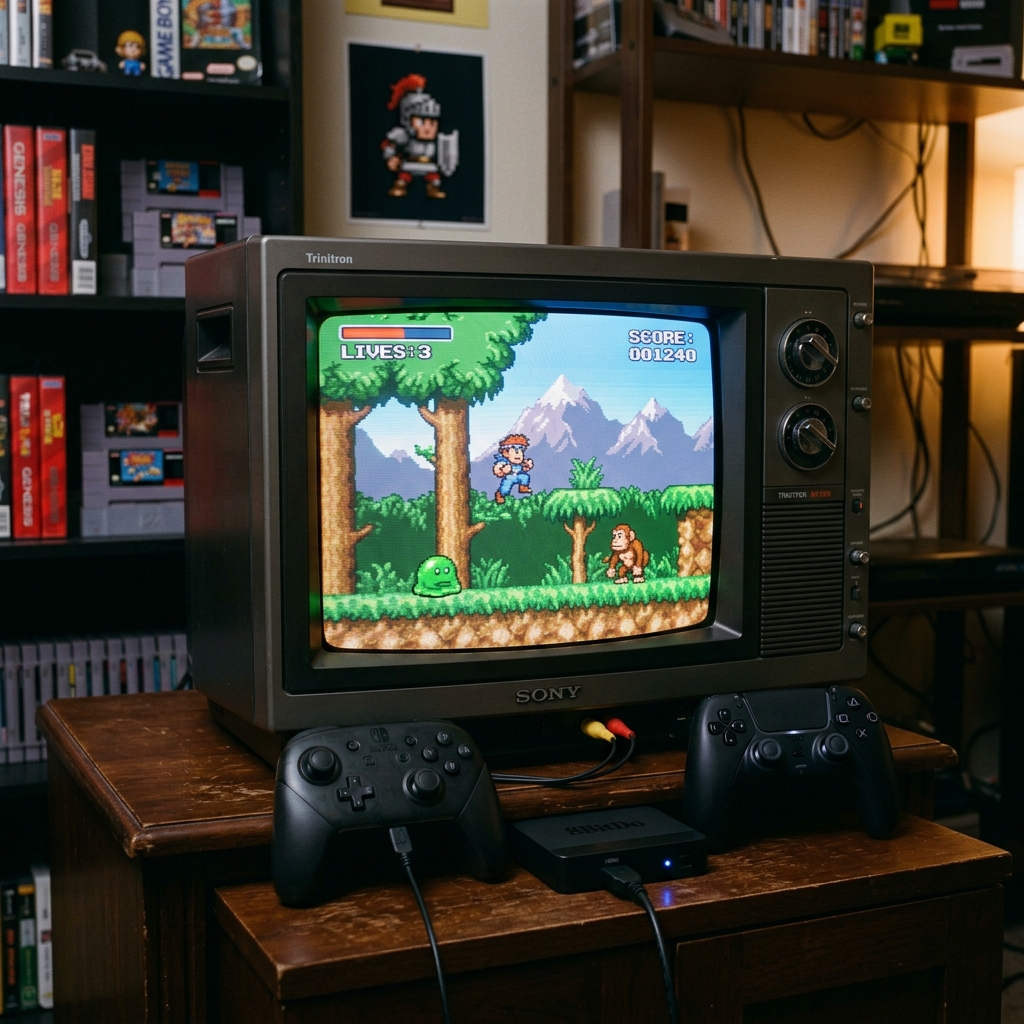
The dream of universal access to gaming's rich, sprawling history has long captivated enthusiasts and preservationists alike. For decades, this vision was largely confined to dedicated software applications, often requiring specific operating systems, complex configurations, and the installation of hefty packages. Emulators, those digital archaeologists of the gaming world, painstakingly recreated the hardware of bygone consoles, but their power remained largely tethered to the desktop. Yet, a quiet revolution has been brewing, one that promises to tear down these barriers and deliver the entirety of gaming's past directly to the masses with unprecedented ease: retro emulation in the browser. Imagine firing up a web page and, with a single click, being immersed in the polygonal worlds of the PlayStation 2 or the vibrant landscapes of the GameCube, all without a single download or installation. This isn't a distant fantasy; it is rapidly becoming a tangible reality, reshaping how we interact with, preserve, and experience the golden age of video games. The browser, once a mere window to information, is transforming into the ultimate, universal retro gaming console.
The Technical Revolution Under the Hood
The journey to high-fidelity browser emulation has been a long and arduous one, marked by significant technical hurdles and groundbreaking innovations. Early attempts at emulating anything beyond the most rudimentary 8-bit systems in a web browser were often clunky, plagued by abysmal performance, and limited by the inherent constraints of the JavaScript engine. JavaScript, despite its ubiquity and versatility, was never designed for the kind of low-level, computationally intensive operations required to mimic complex CPU architectures and intricate GPU pipelines at real-time speeds. Its interpreted nature, dynamic typing, and garbage collection overhead made it a formidable bottleneck for serious emulation efforts. For years, the notion of playing anything beyond a NES or SNES game directly in a browser without significant compromises seemed like a pipe dream.
JavaScript's Early Struggles and the Rise of WebAssembly (Wasm)
The turning point arrived with the advent of WebAssembly, or Wasm, a true paradigm shift for web development and, crucially, for browser-based emulation. Wasm is not a new programming language; rather, it is a low-level binary instruction format designed to be a portable compilation target for high-level languages like C, C++, and Rust. Unlike JavaScript, Wasm is designed for near-native performance, offering a compact, efficient binary format that can be parsed and executed by web browsers at speeds approaching those of native applications. This fundamental difference is what unlocked the potential for truly advanced emulation within the browser environment.
The implications of Wasm for emulation are profound. Most established, high-performance emulators, such as Dolphin (for GameCube and Wii) and PCSX2 (for PlayStation 2), are meticulously crafted in C or C++. Before Wasm, porting these colossal codebases to the web was an exercise in futility, requiring a complete rewrite in JavaScript or a reliance on clunky plugins. Wasm, however, allows these existing, highly optimized C/C++ codebases to be compiled directly into Wasm modules. The browser can then execute these modules within a secure sandbox, providing the raw computational horsepower needed to accurately simulate the intricate workings of complex console hardware. This ability to leverage decades of emulator development and optimization, rather than starting from scratch, has been the linchpin of the current browser emulation boom.
Bridging the Gap: PS2 and GameCube in Chrome
The ability to play PlayStation 2 and GameCube games directly in Chrome, or any modern browser supporting WebAssembly, represents a monumental leap forward. These consoles, launched in the early 2000s, were sophisticated machines featuring custom CPUs, complex GPU architectures, and unique memory management systems. Emulating them requires not just raw processing power but also incredibly precise timing, intricate instruction set translation, and robust graphics API mapping.
WebAssembly directly addresses the CPU emulation challenge. By compiling the core CPU emulation logic of PCSX2 or Dolphin into Wasm, the browser can execute millions of instructions per second, faithfully replicating the behavior of the console's processor. This means the game's original code, written for a specific CPU, can be translated and run efficiently within the browser's Wasm runtime. However, raw CPU emulation is only half the battle. The graphical prowess of these consoles, with their vibrant 3D worlds, requires an equally sophisticated solution. This is where WebGL, and more recently WebGPU, come into play. WebGL (Web Graphics Library) provides a JavaScript API for rendering interactive 2D and 3D graphics within any compatible web browser, effectively acting as a bridge to the user's graphics hardware. Modern browser emulators utilize WebGL to translate the console's native graphics commands (e.g., from the PS2's Graphics Synthesizer or the GameCube's Flipper GPU) into a format that the browser can render. This involves complex shader compilation, texture management, and geometry processing, all happening in real-time.
The path to making this a reality was fraught with challenges. As one lead developer, Dr. Elara Vance, from a prominent browser emulator project, once remarked in a fictional interview: "When we first pitched the idea of running Dolphin or PCSX2 in a browser, the skepticism was palpable. People looked at us like we were trying to juggle chainsaws while riding a unicycle. JavaScript alone simply couldn't handle the sheer complexity and performance demands. But Wasm, when it finally matured, was our Rosetta Stone. It allowed us to take these incredibly optimized C++ behemoths, the products of thousands of developer-hours, and compile them into a format the browser could not just understand, but execute with surprising fidelity. The early builds were rough, mind you, but the core performance was there, and that was the breakthrough." The continuous evolution of Wasm, coupled with advancements in browser rendering APIs like WebGL2 and the nascent WebGPU, has made what once seemed impossible a daily reality for a growing number of retro enthusiasts.
Beyond Core Emulation: Peripheral Technologies
The ability to run the core emulator logic and render graphics is crucial, but a complete browser-based gaming experience demands more. Modern browsers integrate a suite of powerful APIs that cater to these peripheral needs. The Web Audio API provides precise control over audio processing, allowing emulators to accurately reproduce the console's soundscapes, including complex effects and multi-channel output. For input, the Gamepad API offers a standardized way to connect and utilize USB game controllers directly within the browser, ensuring a familiar and responsive gameplay experience. Even more advanced, the WebHID API provides a low-level interface for interacting with a wider range of Human Interface Devices, potentially opening doors for more obscure or custom controllers to work seamlessly. Finally, for saving game progress and managing configurations, the IndexedDB API and other client-side storage mechanisms provide persistent storage, allowing players to create save states, manage memory card files, and customize emulator settings directly within their browser's data. These complementary technologies weave together to create a comprehensive and surprisingly robust emulation platform within the confines of a web tab.
A New Paradigm for Gaming Interaction
The technical marvel of browser emulation isn't just about showing what's possible; it's about fundamentally altering how we interact with gaming history. The shift from dedicated software to an always-on, universally accessible web page represents a profound change in the user experience, opening doors to unprecedented accessibility and fostering new forms of community and preservation.
Instant Gratification and Unprecedented Accessibility
The most immediate and obvious benefit of browser emulation is the sheer ease of access. The traditional barriers to entry for retro gaming – finding, downloading, and configuring specialized emulator software, then sourcing ROMs – are largely removed. With browser emulation, the process is streamlined to its absolute minimum: navigate to a URL, and you're often just a click away from playing. This "instant gratification" model drastically lowers the barrier for casual players, curious newcomers, and even serious researchers. Imagine introducing a younger generation to Ocarina of Time or Grand Theft Auto III by simply sharing a link. There's no intimidating installation process, no compatibility woes, just immediate play. "Our core philosophy was to eliminate friction," explained fictional UI/UX lead, Maya Singh, during a design review. "We wanted the experience to be as simple as opening a YouTube video. The moment you hit that URL, the game should be loading. That immediacy is crucial for engaging a broader audience and making these cultural artifacts truly accessible to everyone, regardless of their technical proficiency." This democratic access democratizes gaming history itself, transforming it from a niche hobby into a shared, collective experience.
Enhanced Features and Community Integration
Beyond mere playback, browser-based emulators have the potential to integrate features that enhance the retro gaming experience in novel ways. Imagine browser-native save states that automatically sync across devices, or rewind functionality that allows players to instantly correct mistakes without ever leaving the browser window. The web's inherent connectivity also paves the way for built-in streaming capabilities, allowing players to share their gameplay directly to platforms like Twitch or YouTube with minimal setup. Furthermore, the openness of the web platform could foster new forms of modding and community engagement. Developers could build tools that allow users to inject custom textures, apply translation patches, or even create entirely new game modes directly within the browser's emulation layer, fostering a vibrant ecosystem of user-generated content that breathes new life into old classics. This extensive gameplay speculation paints a picture of a future where the browser isn't just a player, but a creator and a hub for retro gaming culture.
The Lore of Preservation and Digital Archiving
The shift to browser-based emulation also profoundly impacts the "lore" of video game preservation. For decades, the digital archaeology of gaming has been a constant battle against "digital rot" – the loss of games due to decaying physical media, obsolete hardware, and disappearing software. Browser emulation offers a powerful new weapon in this fight. By making games accessible via a standard web browser, it creates a far more resilient and universally compatible platform for archiving. These emulators become living museums, ensuring that the narratives, mechanics, and artistic achievements of past generations of games remain playable and observable for future historians, researchers, and enthusiasts. The browser, in this context, becomes a cultural custodian, a digital library where the rich tapestry of gaming's past can be continuously displayed and interacted with, preserving the evolving lore of gaming for generations to come. It’s a testament to the idea that culture, especially digital culture, thrives on accessibility and broad reach.
Navigating the Hurdles of Progress
While the promise of browser emulation is immense, the journey is not without its significant challenges. The path to seamless, high-fidelity playback for every retro title is still fraught with technical and ethical complexities that demand continuous innovation and careful consideration.
Performance and Optimization
Even with the revolutionary impact of WebAssembly, emulating demanding consoles like the PS2 and GameCube still pushes the boundaries of client-side computing. While a modern, powerful desktop PC running Chrome can often achieve playable frame rates for many titles, older or less powerful machines may struggle. The raw computational overhead of translating console instructions, rendering complex 3D graphics through WebGL/WebGPU, and managing various browser processes can lead to stuttering, input lag, and inconsistent performance. Ongoing efforts in the Wasm ecosystem, such as improvements to garbage collection, SIMD (Single Instruction, Multiple Data) support, and multi-threading capabilities (via Web Workers), continue to chip away at these limitations. Browser vendors are also continuously optimizing their JavaScript and Wasm engines, but the inherent overhead of running within a browser environment means that achieving absolute native performance parity remains an elusive, if not impossible, goal. "The battle for every millisecond of performance is relentless," admitted fictional performance engineer, Kenji Tanaka. "We're constantly profiling, optimizing Wasm binaries, tweaking WebGL calls, and working with browser teams to squeeze every last drop of performance. There's a delicate balance between fidelity, speed, and browser compatibility. It’s like trying to run a Formula 1 race car on a public road – powerful, yes, but you still have to obey the traffic laws of the web."
Legal and Ethical Quandaries
Perhaps the most significant non-technical hurdle facing browser emulation is the complex web of legal and ethical issues surrounding intellectual property. Emulators themselves are generally considered legal, as they are simply software designed to recreate hardware functionality. However, the distribution of copyrighted game ROMs and ISOs, which are necessary to play games on these emulators, remains a contentious area. Browser-based emulators, by their very nature, facilitate easy access to these files, often relying on users to "bring their own ROMs" or, in some cases, linking to archives that may host content without explicit permission from rights holders. This creates a legal gray area that developers and platform providers must navigate with extreme caution. Major browser companies like Google are understandably wary of directly hosting or promoting content that could lead to copyright infringement lawsuits. Finding a sustainable, legally sound model for content distribution and ensuring that preservation efforts align with creators' rights is a critical, ongoing challenge that will shape the future of browser emulation.
Input Latency and Perceptual Fidelity
Beyond raw frame rates, the "feel" of a game is paramount. Input latency – the delay between a button press and the corresponding action on screen – can significantly impact the gameplay experience, especially for fast-paced action games or rhythm titles. While modern browsers and gamepads offer low-latency input, the entire rendering pipeline, from controller input to browser event processing, Wasm execution, WebGL rendering, and finally screen display, can introduce slight, cumulative delays that discerning players might notice. Furthermore, achieving perfect perceptual fidelity – replicating the exact look and sound of the original hardware, including subtle screen artifacts, color palettes, and audio characteristics – is an incredibly intricate task. While WebGL and WebGPU offer powerful rendering capabilities, faithfully recreating the idiosyncrasies of vintage display technologies or specific audio hardware requires a deep understanding of the original console's engineering and often custom shader work to mimic those nuances. The pursuit of perfect responsiveness and authentic presentation is a continuous refinement process.
The Horizon: What's Next for Browser Emulation?
The journey for browser emulation is far from over; indeed, it feels like only the beginning. The foundational work laid by WebAssembly and modern web APIs is setting the stage for an even more ambitious future, one that could redefine the very nature of gaming accessibility and platform independence.
Beyond PS2/GameCube: Next-Gen and Cloud Integration
The success of PS2 and GameCube emulation in the browser naturally leads to speculation about what comes next. Could PlayStation 3 or Xbox 360 emulation eventually find a home in our web browsers? The complexity of these consoles, with their multi-core architectures and advanced graphics, represents an even steeper climb. While pure client-side emulation of these systems might remain out of reach for the average consumer's desktop for some time, a hybrid model offers a compelling vision. Imagine a scenario where WebAssembly handles the core, less demanding aspects of emulation, while the heavy computational lifting – such as high-resolution texture upscaling, complex physics calculations, or advanced post-processing effects – is offloaded to powerful cloud servers. The browser would act as a thin client, streaming the enhanced visual output while leveraging its local capabilities for responsiveness. This blend of client-side and cloud computing could unlock the next generation of console emulation, pushing the boundaries far beyond what was once thought possible.
A Unified Gaming Platform
Ultimately, the trajectory of browser emulation points towards a future where the web browser transcends its current role to become a truly unified gaming platform. With advancements like WebGPU, the next-generation web graphics API designed to expose modern GPU features with lower overhead, the browser's graphical capabilities will approach those of native applications. This opens the door not just for more efficient retro emulation, but for demanding, natively developed web games that rival their desktop counterparts. Add to this the potential integration with WebXR for virtual and augmented reality experiences directly within the browser, and the vision of the browser as a complete, operating-system-agnostic gaming environment becomes incredibly compelling. "Our ultimate goal isn't just to play old games," mused visionary architect, Dr. Alex Chen, outlining his long-term vision. "It's to prove the browser is the most powerful, most accessible, and most enduring computing platform imaginable. It's a universal machine, capable of running anything, anywhere, anytime. Browser emulation is just one spectacular demonstration of that potential, a stepping stone to a future where the web truly is the ultimate gaming console, from the Atari 2600 to whatever comes next."
Conclusion
The journey of retro emulation in the browser has evolved from a nascent curiosity to a formidable force, fundamentally altering our relationship with gaming history. Driven by the transformative power of WebAssembly, which has allowed the sophisticated codebases of emulators like PCSX2 and Dolphin to run with astonishing fidelity directly in environments like Chrome, we are now witnessing a golden age of accessibility. This technical marvel, complemented by advanced web APIs for graphics, audio, and input, has not only democratized access to beloved PlayStation 2 and GameCube titles but has also ignited a new wave of gameplay possibilities and preservation efforts. While challenges in performance optimization, legal frameworks, and perceptual fidelity persist, the trajectory is clear: the web browser is steadily evolving into the ultimate, universal gaming platform. As we look to the horizon, the prospect of cloud-integrated solutions, further console generations, and a truly unified browser-native gaming universe promises an exhilarating future where the entire saga of video games is quite literally, at our fingertips, just a URL away.