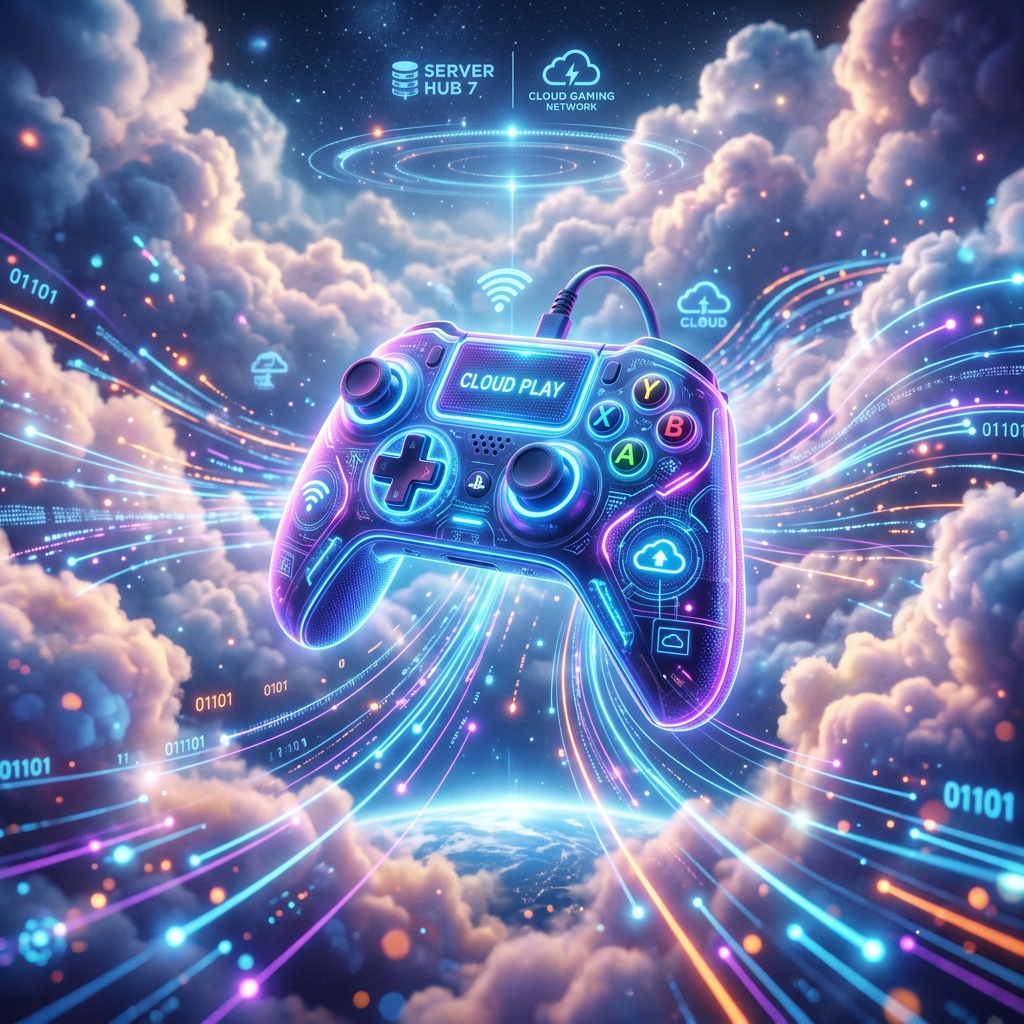

In the ever-evolving landscape of digital entertainment, a fundamental debate rages, shaping the future of how we experience interactive worlds: the enduring supremacy of local hardware versus the burgeoning promise of cloud gaming. For decades, the pinnacle of gaming performance has been synonymous with the high-end PC – a meticulously assembled bastion of cutting-edge components, custom-built for unparalleled fidelity and speed. Yet, as internet infrastructure improves and digital distribution matures, a new challenger has emerged from the ethereal realm of data centers: cloud gaming, offering instant access to blockbuster titles without the hefty upfront investment. This isn't merely a technical discussion; it's a philosophical one, touching upon accessibility, ownership, artistic integrity, and the very nature of our interaction with virtual realities.
The Traditional Bastion: Local Hardware and the Expensive PC
For the discerning gamer, the high-end PC has long been the ultimate platform, a testament to raw power and uncompromised control. It represents the apex of what's possible, a bespoke machine crafted for the most demanding virtual experiences.
Unrivaled Power and Control: The Pros
The advantages of a top-tier gaming PC are manifold and deeply ingrained in the culture of PC gaming. At its core lies unparalleled processing power. A dedicated Graphics Processing Unit (GPU) like an NVIDIA GeForce RTX 4090 or an AMD Radeon RX 7900 XTX, coupled with a high-core-count CPU such as an Intel Core i9 or an AMD Ryzen 9, can render complex scenes, intricate physics, and vast open worlds with a level of detail and frame rate that remains aspirational for most other platforms. This isn't just about pretty pictures; it's about the very fluidity of interaction. A game running at a native 4K resolution with consistent 120+ frames per second offers an immediacy and responsiveness that profoundly impacts gameplay, especially in genres where split-second decisions are paramount. The absence of internet dependency for single-player titles ensures that your experience is never hampered by network fluctuations, guaranteeing consistent performance regardless of external factors.
This raw power directly translates into superior gameplay experiences. Consider the competitive first-person shooter (FPS) scene, where milliseconds dictate victory or defeat. The virtually non-existent input lag of a locally rendered game, combined with high refresh rate monitors, allows for precise aiming and lightning-fast reactions. For games like Valorant or Counter-Strike 2, where every flick of the wrist and every auditory cue carries immense tactical weight, local hardware provides the purest, most unadulterated competitive environment. But beyond competition, there's the realm of immersion. Open-world RPGs like The Witcher 3: Wild Hunt or Cyberpunk 2077 truly shine on powerful local hardware, where every blade of grass, every character model, and every particle effect contributes to a rich, believable world. "Our goal with Elysium Chronicles was to create a living, breathing world with an unprecedented level of environmental detail and dynamic systems," explains Elias Thorne, Lead Technical Director at Aurora Studios. "Achieving that vision, especially with our proprietary physics engine and ray-traced global illumination, absolutely necessitates the raw computational muscle of a high-end PC. We design for that ceiling, knowing that players with the right hardware will experience the game exactly as we intended, without compromise."
The integration of lore, often a cornerstone of immersive experiences, is deeply enhanced by the fidelity local hardware provides. Imagine exploring the intricate, cyberpunk-infused districts of Night City or the hauntingly beautiful landscapes of the Continent. When textures are crisp, lighting is dynamic, and character models are rendered with photorealistic detail, the lore embedded in environmental storytelling, character design, and even the subtle wear and tear on objects becomes significantly more impactful. The ability to pause, zoom in, and truly appreciate the artistry in a game world running at maximum settings fosters a deeper connection to its narrative and history. Furthermore, the PC platform offers unparalleled modding capabilities and customization. Communities have built entire new experiences, expanded existing lore, and breathed new life into classic titles for years, often pushing the boundaries of what the original developers envisioned. This level of user-driven content and personalization is a direct benefit of owning and controlling the underlying hardware and software, extending the longevity and replayability of games exponentially.
The Weight of Ownership: The Cons
Yet, the gilded cage of local hardware comes with its own set of burdens, most notably the exorbitant upfront cost and rapid depreciation. Building a top-tier gaming PC can easily cost anywhere from $1,500 to $4,000, sometimes even more, depending on components and peripherals. This is a significant financial barrier to entry, placing cutting-edge experiences out of reach for many. Moreover, technology advances at a relentless pace. A state-of-the-art GPU purchased today might be mid-range within two to three years, necessitating constant upgrades to maintain peak performance. This cycle of acquisition and obsolescence translates into a continuous financial drain. "Optimizing for the sheer variety of PC hardware is a monumental task," admits Lena Petrov, Head of Engineering at PixelForge Interactive. "Every year, new GPUs, CPUs, and memory configurations emerge, and ensuring a consistent experience across all of them, from ancient integrated graphics to the latest enthusiast cards, is a huge drain on development resources. It's a double-edged sword: the power is incredible, but the fragmentation can be a nightmare."
Beyond the financial outlay, there are practical considerations. High-performance components consume significant amounts of power, leading to increased electricity bills and a larger carbon footprint. They also generate considerable heat, requiring elaborate cooling solutions which, in turn, often produce noticeable noise. The physical space required for a PC tower, monitor, and peripherals can be substantial, and the need for regular maintenance – cleaning dust filters, updating drivers, troubleshooting software conflicts – demands a certain level of technical knowledge and commitment from the user. For someone simply wanting to pick up and play, these hurdles can be daunting. The dream of experiencing the latest saga in the Elder Scrolls universe at its absolute graphical zenith may be tantalizing, but the financial and logistical investment required to achieve that dream on local hardware means that for many, the lore remains glimpsed through a slightly less pristine window.
The Ethereal Frontier: Cloud Gaming and its Promise
In stark contrast to the physical heft and financial commitment of local hardware, cloud gaming presents a vision of frictionless access, where the game exists not on your machine, but in a distant data center, streamed directly to your device.
Accessibility and Convenience: The Pros
The most compelling advantage of cloud gaming is its unprecedented accessibility and convenience. The core premise is revolutionary: no expensive hardware required. Instead of investing thousands in a PC, users simply need a compatible device – a smart TV, a smartphone, a tablet, a low-end laptop, or even a Chromebook – and a stable internet connection. The heavy lifting of rendering and processing is handled by powerful servers in a data center, allowing even the most graphically intensive titles to be played on humble hardware. This dramatically lowers the barrier to entry, democratizing access to high-fidelity gaming for a much broader audience. "Our mission with 'Project Nebula' is to bring AAA gaming to everyone, everywhere," states Dr. Aris Thorne, CEO of Quantum Leap Games, a fictional cloud gaming platform provider. "The traditional hardware cycle simply excluded too many potential players. With cloud streaming, a child in a developing nation with a basic smartphone can now experience the same stunning worlds and intricate narratives as someone with a top-of-the-line gaming rig, instantly. It’s about breaking down economic and geographical barriers, expanding the very definition of who a 'gamer' can be."
This accessibility extends to the user experience itself. Cloud gaming offers instant access to games, eliminating lengthy downloads, complex installations, and tedious patching cycles. A subscriber can browse a library, click a title, and be playing within seconds. This "Netflix of games" model simplifies game discovery and consumption, encouraging experimentation with new genres and titles without the commitment of a purchase or download. For game developers, this means their creations can reach a wider audience faster, unburdened by distribution logistics or the need for extensive hardware optimization across myriad local configurations. The convenience factor is immense; imagine being able to pick up your save file from Assassin's Creed Valhalla on your home TV, then seamlessly transition to playing on your tablet during a commute, all without any local installation or transfer. This fluidity fundamentally changes how and where people engage with gaming lore, making vast narratives more portable and integrated into daily life.
The Ghost in the Machine: The Cons
Despite its alluring promise, cloud gaming is not without significant drawbacks, primarily rooted in its reliance on external infrastructure. The most critical limitation is internet dependency, specifically the need for high bandwidth, low latency, and minimal jitter. For an optimal experience, a stable, high-speed fiber optic connection is almost a prerequisite. Even with such a connection, the inherent delay involved in sending input commands to a distant server and receiving a compressed video stream back – known as input lag – can be noticeable. For fast-paced, reaction-based games like competitive FPS titles, fighting games, or rhythm games, even a few milliseconds of lag can render the experience frustrating, if not unplayable. The subtle timing of a parry in Sekiro: Shadows Die Twice or the precise aim in Apex Legends becomes incredibly difficult when there's a disconnect between your action and the on-screen response. "The artistic intent behind a fast-paced action game like our upcoming Project Chimera is so reliant on immediate player feedback," explains Isabella Reyes, Creative Director at Obsidian Dawn Studios. "When latency enters the equation, the entire combat rhythm, the sense of impactful hits, the flow state we strive for – it all degrades. It's like trying to conduct an orchestra when half the musicians are a beat behind. It fundamentally compromises the player's connection to the world and its challenges."
Furthermore, the video stream from a cloud gaming service is inherently compressed, leading to graphical artifacts and a loss of visual fidelity compared to a locally rendered game. During scenes with rapid movement or intricate detail, blockiness, blurriness, or a "smudged" appearance can become apparent, breaking immersion. This degradation can be particularly detrimental to games where environmental storytelling and visual flair are crucial to the lore. A beautifully crafted landscape or a meticulously designed character model might lose its impact when viewed through a compressed, latency-prone stream. The subtle nuances of light and shadow that define a game's atmosphere might be lost, diminishing the emotional weight of a narrative moment. Beyond performance, there's the issue of ownership and library limitations. When you subscribe to a cloud gaming service, you are essentially renting access to a curated library of games. You don't "own" the games in the traditional sense, and if a service removes a title or ceases operation, your access to that game and its associated lore can disappear. This contrasts sharply with the PC model, where purchased games, even digital ones, often remain accessible through platforms like Steam indefinitely, allowing for long-term preservation and replayability.
The Crossroads: Where Do We Stand?
The debate between cloud gaming and local hardware isn't a zero-sum game; rather, it represents a branching path in the evolution of gaming, each offering distinct advantages and catering to different player needs and preferences. The future likely lies not in the complete triumph of one over the other, but in a more complementary ecosystem.
The technical landscape is constantly shifting. Advancements in internet infrastructure, particularly the rollout of 5G and ubiquitous fiber optics, promise to mitigate some of cloud gaming's latency challenges. Meanwhile, local hardware continues to push boundaries, but also explores new paradigms like edge computing, where processing power is distributed closer to the user to reduce latency, blurring the lines between pure cloud and pure local. We're also seeing the rise of AI upscaling techniques like DLSS and FSR, which allow local hardware to achieve higher resolutions and frame rates with less raw power, making visually stunning games more accessible on a wider range of PCs.
From a gameplay perspective, certain genres will always favor the immediate responsiveness of local hardware. Competitive esports, high-end VR experiences (which demand incredibly low latency to prevent motion sickness and maximize immersion), and complex simulation games with their intricate, real-time calculations are likely to remain the domain of dedicated local machines for the foreseeable future. The tactile feedback, the precision, and the unblemished visual fidelity are simply too critical. However, cloud gaming is perfectly suited for casual gaming, exploring vast open-world single-player titles without the hardware investment, or for players who prioritize convenience and accessibility across multiple devices. Imagine a future where you play the graphically intensive Starfield on your smart TV via cloud streaming, enjoying the vast lore of the cosmos without a console, but then switch to your high-end PC for a round of Overwatch 2 for peak performance.
Lore analysis, too, finds itself at a crossroads. Cloud gaming democratizes access to narrative-rich experiences, allowing more people to delve into the intricate histories of Final Fantasy or the political machinations of Game of Thrones-esque RPGs. This wider reach could foster new communities and expand the audience for deep, immersive storytelling. However, the potential for graphical compression and input lag means that the most subtle, visually driven aspects of lore – the intricate details on an ancient artifact, the nuanced facial expressions conveying emotion – might lose some of their impact. Local hardware will continue to offer the purest, most uncompromised canvas for artistic expression and lore delivery, allowing every meticulously crafted detail to shine. Game developers, in turn, may begin to design experiences that intelligently adapt to the capabilities of both platforms, perhaps offering dynamic detail scaling for cloud streams or designing narrative elements that are less reliant on split-second interactions for cloud users.
Conclusion
The debate between cloud gaming and local hardware is a rich tapestry woven from technological capabilities, economic realities, and the desires of a diverse player base. There is no singular "winner," but rather a dynamic interplay shaping the future of interactive entertainment. Local hardware, particularly the high-end PC, remains the pinnacle of performance, offering unparalleled fidelity, control, and the freedom of ownership, albeit at a significant financial and logistical cost. It is the platform for purists, for those who demand the absolute best and are willing to invest in it. Cloud gaming, conversely, champions accessibility and convenience, dismantling hardware barriers and democratizing access to blockbuster titles across a multitude of devices. While it grapples with the inherent challenges of latency and visual compromise, its promise of instant, ubiquitous play is transformative. As internet infrastructure continues its global expansion and streaming technology becomes more sophisticated, the lines between these two paradigms will undoubtedly blur. The ultimate victor in this evolving landscape will not be a single technology, but rather the consumer, empowered with an unprecedented array of choices, able to select the platform that best aligns with their budget, their lifestyle, and their desired depth of immersion into the captivating worlds that games offer.